Last updated November 18, 2026




Free design consultation - KraftMaid and Wellborn cabinet lines, Cambria and Silestone surfaces, and every tier from refacing to full custom laid out side by side
Seasonal Kitchen Remodeling Care for North Las Vegas: Year-Round Homeowner’s Guide
Winter in North Las Vegas doesn’t mean snow. It means a swing of 40 degrees or more between a cold desert night and a sunny afternoon, and that daily push-and-pull works on a remodeled kitchen in ways most homeowners never think about until a caulk line splits or a cabinet door starts rubbing its neighbor. A generic spring-cleaning checklist written for a temperate climate misses almost everything that actually stresses a kitchen here. What your cabinets, counters, and fixtures face in North Las Vegas is not four seasons but four distinct environmental phases: a furnace-hot summer, a short violent monsoon stretch, a swing-heavy winter, and a windy, dusty spring. This guide walks you through each phase and the annual tasks that keep a premium kitchen looking and functioning the way it did the month it went in.
Quick Answer
Seasonal kitchen care in North Las Vegas follows four environmental phases rather than traditional seasons: summer heat and intense UV, the July-August monsoon humidity spikes, winter’s large day-night temperature swings, and spring’s dust storms. The core of a year-round routine is checking and re-sealing caulk joints and countertop seams, controlling indoor humidity against the dry outdoor air, keeping cabinet finishes out of direct sun, and descaling fixtures on a schedule matched to the valley’s hard water, with the heaviest maintenance falling at the winter-to-spring and summer-to-monsoon transitions.
Styles & brands we work with
- Shaker
- Modern flat-panel
- Two-tone cabinets
- KraftMaid
- Cambria quartz
- Butcher block
- Open shelving
Table of Contents
- Why North Las Vegas Kitchens Aging on Environmental Phases, Not Seasons
- The Summer Phase (June to September): Heat, UV, and Cabinet Finishes
- The Monsoon Phase (July and August): Humidity Spikes and What They Do
- The Winter Phase (November to February): Thermal Expansion Checks
- The Spring Phase (March to May): Dust Storm Aftermath
- The Hard Water Cycle: Re-Sealing and Descaling on a Desert Schedule
- Your Annual Kitchen Care Calendar, Month by Month
- Choosing Materials That Handle the Cycle: What We Look For
Why North Las Vegas Kitchens Age on Environmental Phases, Not Seasons
A kitchen in a mild coastal climate faces one long, fairly stable environment. A kitchen in North Las Vegas faces four short, intense ones, and each one attacks a different material in a different way. That’s the single most useful thing to understand before you start any care routine. Your materials don’t fail because of age alone. They fail at the seams, the joints, and the transitions, and those are exactly where the environment does its work.
Think about what a North Las Vegas kitchen actually sits inside. It’s a sealed box kept at roughly 75 degrees by an air conditioner for months while the outside air climbs past 110. Then a monsoon storm rolls through and pushes outdoor humidity up fast before it drops again. Then winter arrives with those wide day-night swings. None of these are dramatic on their own. Repeated over a year, they add up at the points where two materials meet: the caulk line where the countertop meets the backsplash, the seam where two slabs join, the tiny gap between a cabinet door and its frame.
We’ve seen this pattern enough in our own kitchen work around North Las Vegas to know it’s the local variable that matters most, and it’s why we tell every homeowner the same thing after a remodel: your care calendar should follow the environment outside the window, not the calendar on the wall. A kitchen cared for on that basis holds its finish and alignment far longer than one cleaned on a generic schedule.
Here’s how the four phases break down:
- Summer (June to September): UV exposure through windows, extreme heat, and constant air-conditioning pulling moisture out of the air and out of wood.
- Monsoon (July and August): Short bursts of high humidity that swell wood and can affect natural stone, followed by a rapid return to dry air.
- Winter (November to February): Large day-night temperature swings that cause expansion and contraction at seams and joints.
- Spring (March to May): Wind-driven dust that settles into vents, grout lines, and the tops of cabinets.
- All year: Hard water that leaves mineral deposits on fixtures and can dull some surface finishes if left alone.
The Summer Phase (June to September): Heat, UV, and Cabinet Finishes
Summer is the longest and most punishing phase for a North Las Vegas kitchen, and most of the damage is quiet. The two biggest threats are UV light through windows and the interaction between extreme outdoor heat and air-conditioned indoor air.
UV bleaching on cabinet finishes
Direct sun through a kitchen window will fade a painted or stained cabinet finish over time, and the effect is uneven. The cabinet face that catches the afternoon sun can shift tone while the one next to it, in shade, doesn’t. On a premium line like KraftMaid or Wellborn, that mismatch is exactly what you want to prevent, because a matched set of doors is only matched if they age together. Pull blinds or shades during the brightest part of the day on the windows that hit your cabinetry directly. It’s the simplest, cheapest protection there is.
Ventilation against the outdoor heat
When it’s 110 outside, your range hood is doing more work than you think. Cooking heat and moisture have to leave the kitchen, and if the hood isn’t pulling properly, that moisture lands on cabinet surfaces and in the air around them. Run the hood every time you cook, and keep the filter clean so airflow doesn’t drop off. Check the filter on a regular schedule during summer, because a grease-clogged filter is a vent that isn’t venting.
AC humidity effects on wood cabinets
Air conditioning removes moisture from indoor air, and wood responds by shrinking slightly. That’s normal, but it means summer is when cabinet doors are most likely to develop a hairline gap or a slightly stiff hinge. A door that sticks in July and frees up in the fall is telling you about the indoor humidity, not about the cabinet. If you run a whole-house humidistat, keep it in a moderate range rather than letting the house swing from very dry to humid and back.
Summer maintenance checklist
- Close or angle blinds on windows that throw direct afternoon sun on cabinetry.
- Clean the range hood filter and confirm strong airflow before heavy cooking.
- Wipe cabinet faces with a soft, slightly damp cloth rather than a soaking one, and dry them.
- Check that the refrigerator and any under-counter appliances have clear ventilation at the front and back.
- Look at cabinet door alignment now, so a summer shift gets caught before it becomes a rub mark.
The Monsoon Phase (July and August): Humidity Spikes and What They Do
The monsoon stretch is short but it’s the most abrupt environmental change your kitchen sees all year. Outdoor humidity can climb sharply during a storm and then fall back within a day or two. That fast in-and-out is harder on materials than sustained humidity would be, because nothing has time to equalize.
What happens to natural stone and quartz surfaces
If you have natural stone, such as quartzite, the stone itself is dense and handles moisture well on the surface, but the seams and the edges are where moisture finds a way in if the sealant has worn. That’s why the monsoon transition is a good time to look closely at your seams, not just the slab face. Cambria quartz and other engineered quartz surfaces are non-porous, so they don’t absorb moisture the way natural stone can, which makes them easier to live with in this climate. But the caulk line at the backsplash and any seam fill are still worth a look, because those are the parts that can open up with the temperature and humidity swing.
What happens to wood drawer boxes
Wood drawer boxes and cabinet frames swell slightly when humidity rises. During a monsoon spike, a drawer that normally glides can feel a little tighter, and a cabinet door can sit a fraction differently in its frame. This is usually temporary. The mistake is to force a sticking drawer or reach for sandpaper. If something still binds after the humidity settles back down, that’s the point to have it looked at.
Monsoon watch list
- Run the range hood and any exhaust fan during and after cooking to pull moisture out.
- Wipe up any water that reaches countertops or the floor near the sink promptly.
- Check the caulk line where the backsplash meets the counter for any soft or lifting spots.
- Note any drawer or door that binds, then re-check it after the dry air returns.
- Keep an eye on the seal around the sink cutout, which sees the most direct water.
The Winter Phase (November to February): Thermal Expansion Checks
Winter is the sneaky phase, because the outdoor temperature is pleasant and nothing looks wrong. But the day-to-night swing in North Las Vegas in winter can run past 40 degrees, and every one of those swings moves materials a little. The joints take the strain.
Countertop seam checks
Where two countertop sections meet, a seam fill holds them together and keeps the surface visually continuous. Repeated expansion and contraction can work at that fill. Run a fingertip slowly along each seam and feel for a lip or a rough spot. If you can catch a fingernail in it, that seam deserves a closer look before it widens. The same goes for the edge where the counter meets the wall.
Caulk integrity at backsplash transitions
The caulk line between the countertop and the backsplash is the most common failure point in any kitchen, and winter swings are when it starts. Look for a hairline gap, a spot that has pulled away, or a line that has gone chalky. A compromised caulk joint lets water get behind the backsplash, and that’s a bigger problem than the caulk itself.
Cabinet door alignment shifts
Doors and drawers move with the temperature, and winter is when you’re most likely to see a door that no longer sits flush or a reveal that’s uneven from top to bottom. European-style hinges usually have small adjustment screws, but before you touch them, check whether the shift is seasonal. If a door was aligned in fall and looks off in January, it may well come back on its own. Adjusting it mid-swing can mean it’s off in the other direction by summer.
Winter checklist
- Run a fingertip along every countertop seam and the counter-to-wall edge.
- Inspect caulk lines at the backsplash for gaps, lifting, or chalkiness.
- Open and close every cabinet door and drawer, and note anything that rubs.
- Check that under-cabinet lighting still switches cleanly and the fixtures are secure.
- Look at the seal around the sink and any cutout in the counter.
The Spring Phase (March to May): Dust Storm Aftermath
Spring in North Las Vegas brings wind, and wind brings dust. It settles on every horizontal surface in the house, but the places that matter most in a kitchen are the ones you don’t see: appliance vents, grout lines, the tops of cabinets, and the lenses of under-cabinet lights.
Appliance vents
The refrigerator condenser coils, the range hood filter, and any vented appliance need attention after a dusty stretch. Dust on condenser coils makes the fridge work harder, and dust in a hood filter cuts airflow. Both are easy to address and easy to forget.
Grout and tile
Dust works into grout lines and, over time, can make them look dingy even after a normal wipe-down. A soft brush and a gentle cleaner on a regular spring schedule keeps grout looking like it did when it was new. Avoid harsh, abrasive cleaners, which can wear the grout surface and make it hold dirt more readily next time.
Under-cabinet lighting
Dust film on a light lens dims the light and can bake onto a warm fixture. Wipe the lenses and the housing with a dry microfiber cloth. While you’re there, check that the fixtures are still firmly attached, since vibration and seasonal movement can loosen mounting screws over time.
Spring checklist
- Vacuum or brush off refrigerator condenser coils.
- Clean or replace the range hood filter and confirm airflow.
- Scrub grout lines with a soft brush and a gentle cleaner, then dry.
- Wipe down under-cabinet light lenses and check the fixtures are secure.
- Dust the tops of cabinets and any open shelving.
- Wipe cabinet faces and hardware with a soft, slightly damp cloth.
The Hard Water Cycle: Re-Sealing and Descaling on a Desert Schedule
North Las Vegas water is hard, and that shows up first on the fixtures: spots on the faucet, a cloudy film on the sink, a white ring at the base of the tap. Left alone, mineral deposits build up and become harder to remove. The fix is a schedule, not a scrub session.
For natural stone surfaces, re-sealing is the annual task that protects the surface from both water and staining. The timing that works in this climate is typically once a year, and the spring-to-summer transition is a practical point to do it, before the heaviest use season. A simple water-bead test tells you whether the seal is still working: a few drops of water on the surface should bead up rather than soak in. Engineered quartz like Cambria doesn’t need sealing, because it isn’t porous, but the seams and edges still deserve the winter check described above.
For fixtures, pair Kohler, Moen, or Blanco hardware with a habit of wiping them dry after use and descaling on a regular schedule. A mild descaling routine matched to how hard your water runs keeps the finish bright and the aerators flowing. If your faucet aerator slows down, it’s usually mineral build-up, and a soak in a descaling solution restores flow.
Hard water also works on the sink itself. Stainless and composite sinks from a brand like Blanco hold up well but still benefit from a quick dry after each use. It’s a small habit with a long payoff.
Your Annual Kitchen Care Calendar, Month by Month
Here’s the routine we recommend to homeowners, organized around the four phases and the annual hard-water tasks. It’s not a lot of work spread across the year, and it’s far easier than fixing a failed seam or a warped door later.
- March to May (spring): Dust storm cleanup. Vents, grout, under-cabinet lights, cabinet tops. Re-seal natural stone before summer. Descaling routine on fixtures.
- June to September (summer): Manage UV with blinds. Clean the hood filter regularly. Watch cabinet door alignment. Keep indoor humidity moderate.
- July and August (monsoon): Vent moisture during cooking. Check backsplash caulk and sink seals. Note any binding drawers or doors, then re-check after the dry air returns.
- November to February (winter): Seam and caulk checks. Cabinet door alignment review. Confirm under-cabinet lighting is secure. Watch for seasonal shifts and don’t over-adjust.
- Once a year: Natural stone re-seal. Full fixture descale. Review of all caulk joints and countertop seams.
Keep a simple note of what you check and when. Over a couple of years you’ll see which parts of your kitchen move with the seasons and which stay put, and that pattern is the most useful maintenance information you can have.
Choosing Materials That Handle the Cycle: What We Look For
The best seasonal care routine starts with materials chosen for this climate. In our experience remodeling kitchens in North Las Vegas, the surfaces and cabinetry that hold up best through the four phases share a few traits.
For countertops, engineered quartz like Cambria, Silestone, or Caesarstone handles the humidity swings and hard water better than most natural stone because it’s non-porous. That means fewer sealing tasks and less worry about moisture at the surface. It doesn’t make the seams maintenance-free, which is why the winter seam check still applies. Natural quartzite is beautiful and durable, but it does want an annual seal and a little more attention.
For cabinetry, the finish matters as much as the box. A quality line like KraftMaid or Wellborn gives you the construction to survive seasonal movement, and a finish that resists fading when the sun hits it. Pair that with blinds and the UV problem is handled at the source.
For fixtures, Kohler, Moen, and Blanco hardware is built to take hard water if you descale on schedule. The sink and faucet are the parts of a kitchen that see the most water, so they’re worth choosing well and caring for consistently.
If you’re planning a kitchen remodel rather than maintaining an existing one, the choices you make now set the care routine for years. That’s part of what we work through with homeowners during kitchen remodeling, and it’s why we carry competing lines in each category: the decision should be yours, informed by how the material performs here, not by what one brand happens to offer.
Common Mistakes to Avoid
- Cleaning cabinets with a wet cloth or an all-purpose spray. Excess moisture and harsh cleaners dull finishes and can lift edges. Use a soft cloth that’s barely damp, and dry the surface afterward.
- Adjusting cabinet doors mid-season. A door that shifts in January may come back in summer. Over-adjusting during a temperature swing can leave it off in the opposite direction later.
- Ignoring a hairline caulk gap at the backsplash. That small gap lets water behind the backsplash and into the wall. Catch it in the winter check, before it becomes a repair rather than a re-caulk.
- Skipping the annual seal on natural stone. In a dry, hard-water climate, an unsealed stone surface stains more easily and is harder to clean. The spring-to-summer window is the practical time to re-seal.
- Neglecting the range hood filter. A clogged filter cuts airflow and lets cooking moisture settle on cabinets. Cleaning it on a regular summer schedule is one of the highest-value habits in this climate.
- Letting dust build up on condenser coils and under-cabinet lights. Spring dust storms load both. A quick brush and wipe keeps appliances efficient and lighting bright.
- Letting direct sun hit cabinetry all afternoon. UV fades finishes unevenly, and once the color shifts it can’t be wiped back. Blinds or shades on the sun-facing window prevent it.
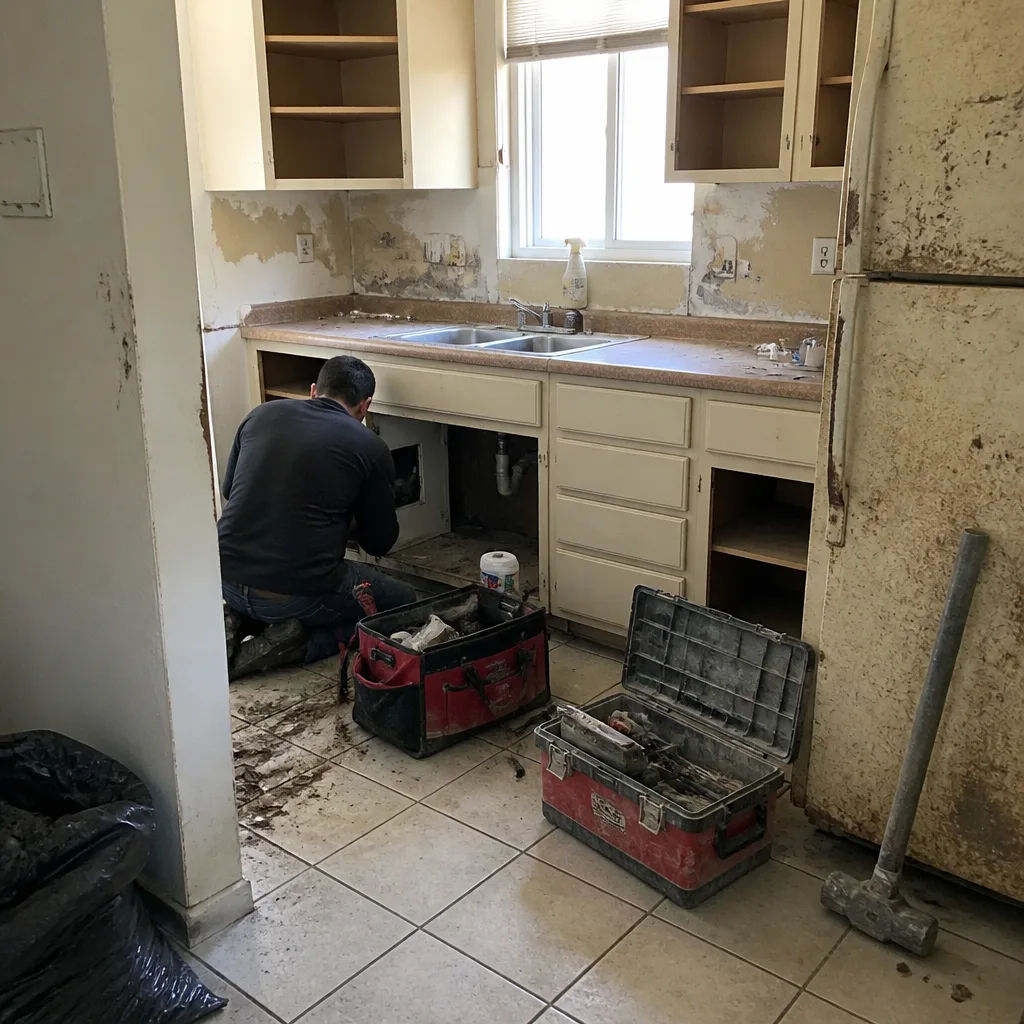
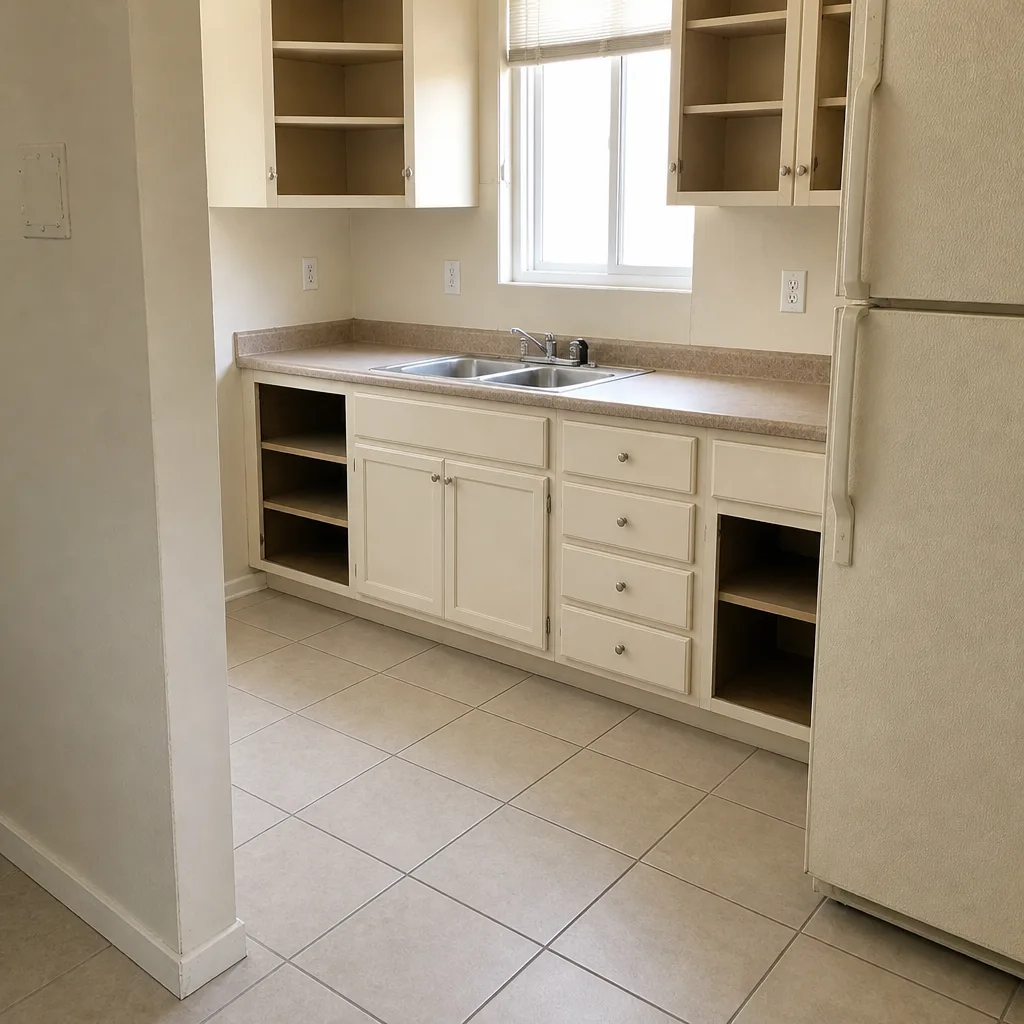
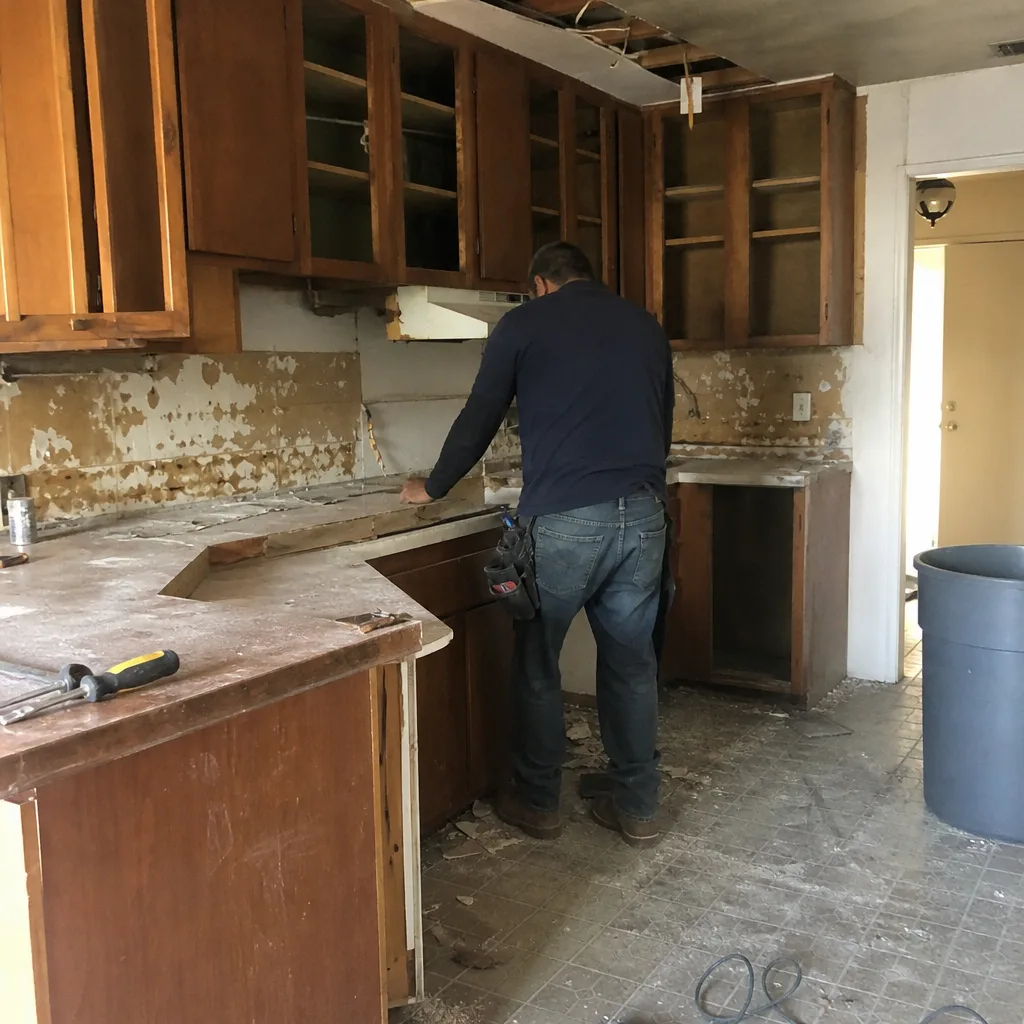
See the difference
 Before
 After
 Before
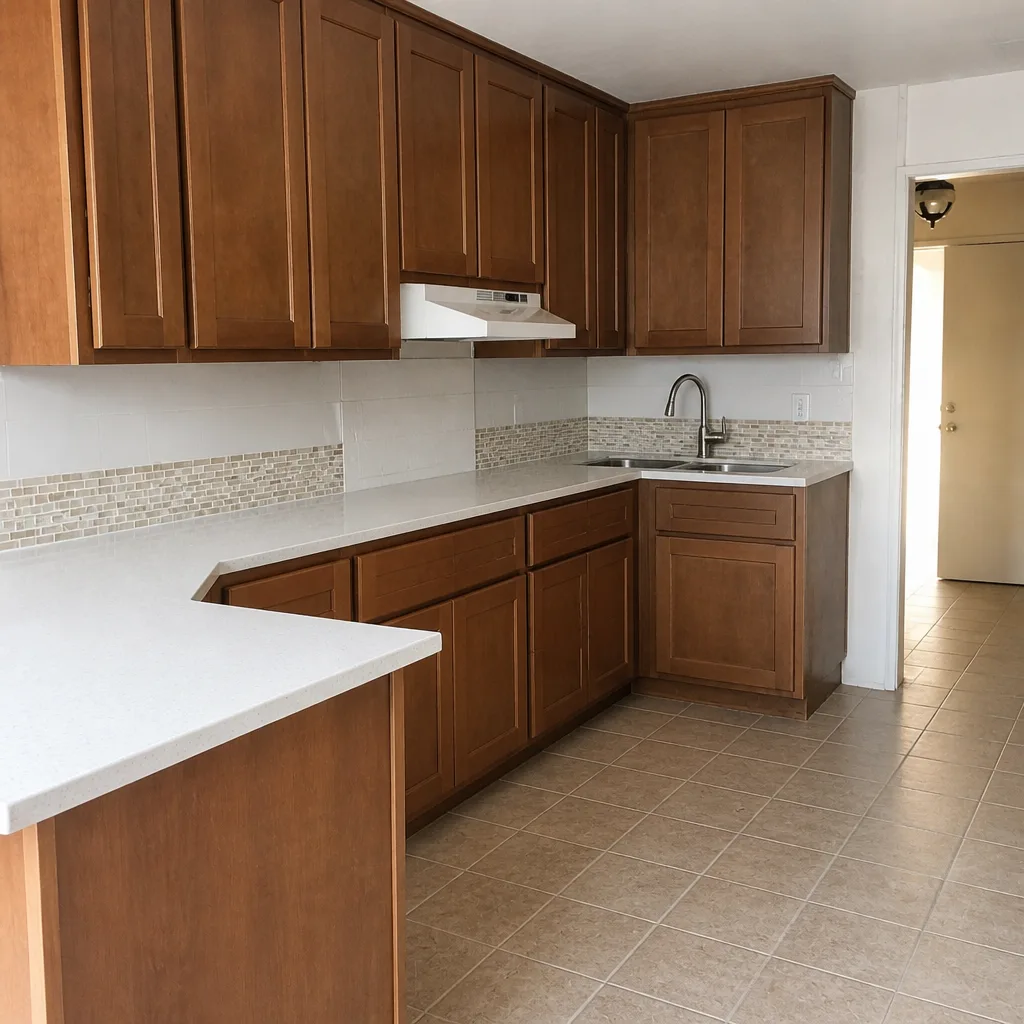 After
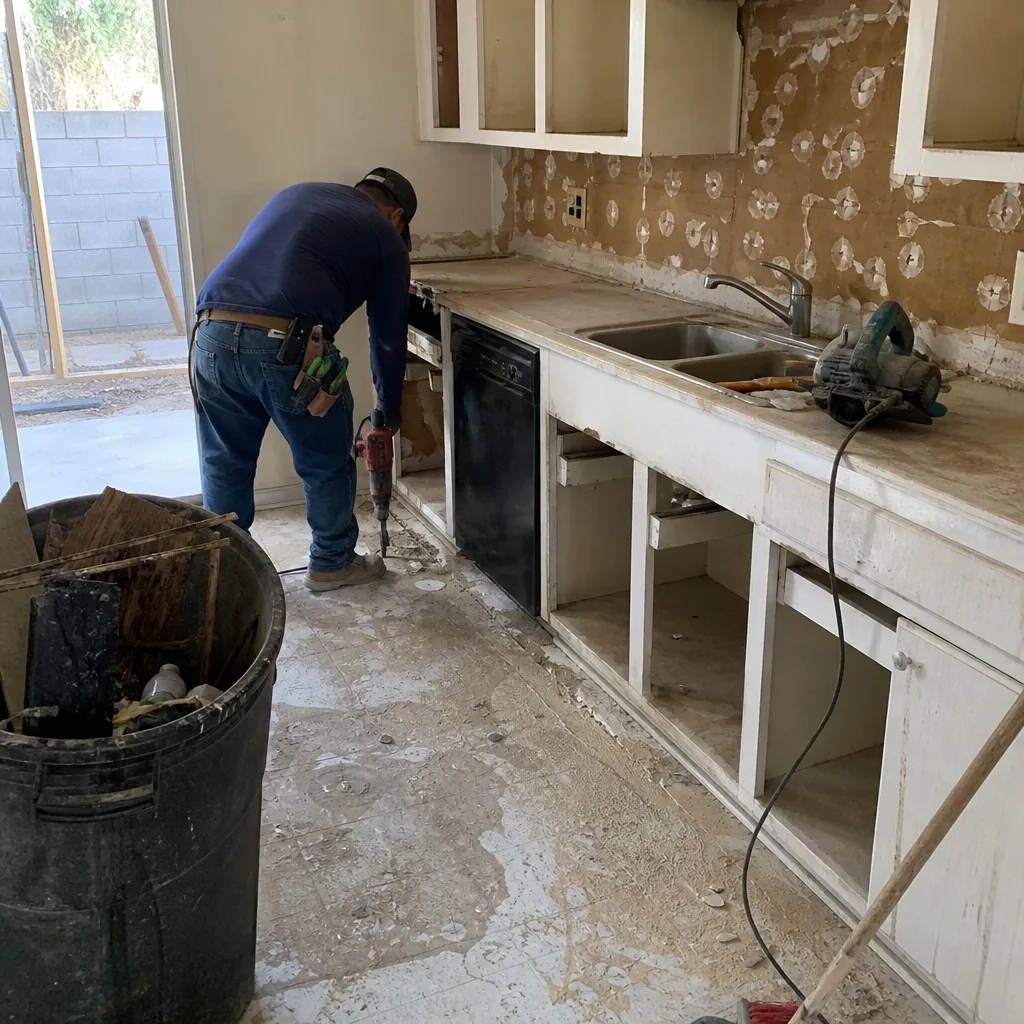 Before
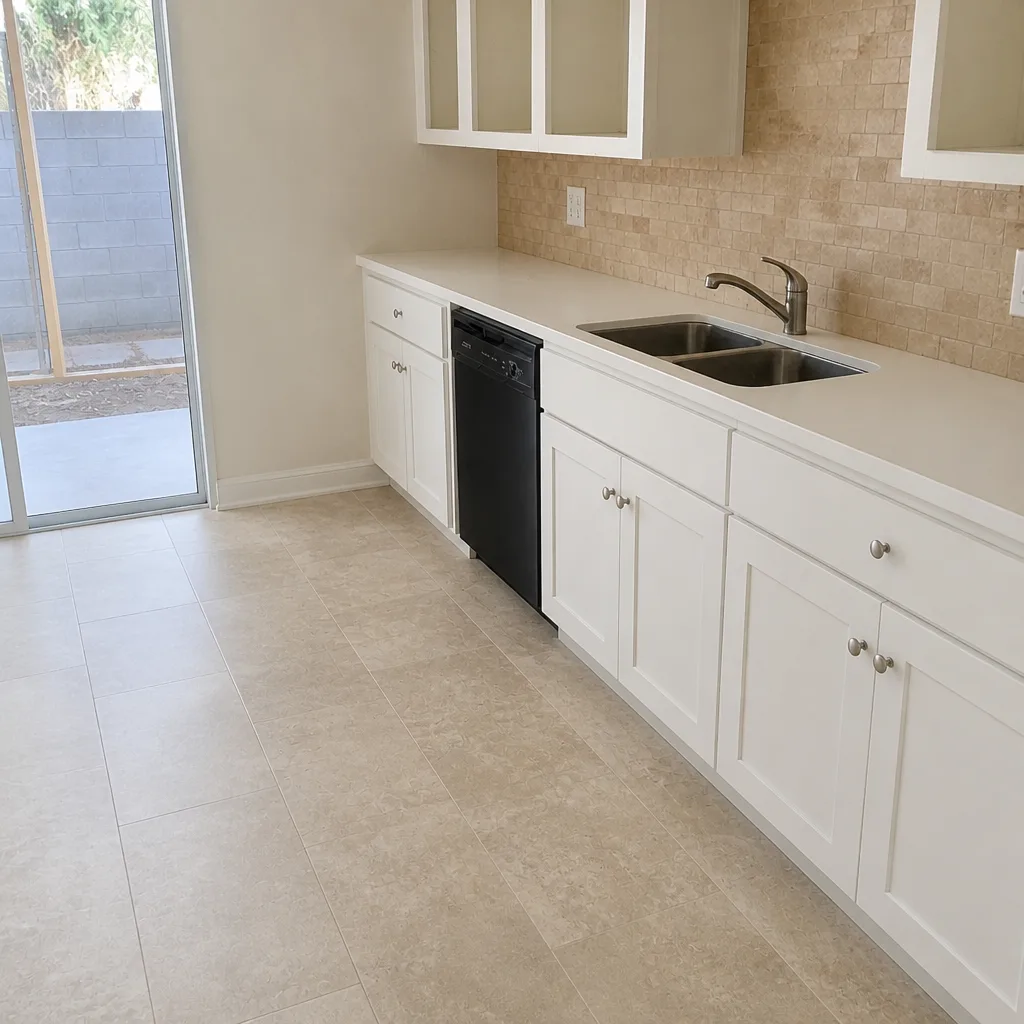 After
When to Call a Professional
Most seasonal care is homeowner work: wiping, checking, dusting, and descaling. But some situations call for a professional eye. If a countertop seam has opened enough to catch a fingernail, if water has gotten behind the backsplash and the caulk line won’t stay sealed, or if a cabinet door or drawer still binds after the humidity has settled, it’s time to have it looked at rather than patch it. The same goes for anything that suggests a leak around the sink cutout or a shift in a cabinet frame that goes beyond ordinary seasonal movement. Kitchen Remodel North Las Vegas offers free estimates in North Las Vegas, and we can tell you whether what you’re seeing is a routine maintenance item or something that needs a real fix. Call (833) 620-5631. We answer 24/7. Fast dispatch from 7am to 7pm, Sunday through Friday.
Frequently Asked Questions

Natural stone such as quartzite typically needs re-sealing about once a year in this climate, and the spring-to-summer transition is a practical time to do it. Engineered quartz like Cambria doesn’t need sealing because it’s non-porous, but its seams and edges should still be checked each winter. A quick water-bead test tells you whether a natural stone seal is still working: if the water soaks in rather than beading up, it’s time to re-seal. Call (833) 620-5631 for an exact quote if your kitchen needs more than routine care; estimates are free.
Summer air conditioning pulls moisture out of indoor air, and the resulting swing can cause wood cabinet frames and doors to move slightly, which makes a door or drawer feel tight. That’s usually seasonal and temporary. If the binding continues after the dry air settles or if the door rubs enough to mark the finish, have it looked at rather than forcing it. Call (833) 620-5631 for a free estimate if you want an expert opinion.
Hard water stains on faucets and sinks come from mineral deposits, and the fix is a regular descaling routine matched to how hard your water runs rather than an occasional deep scrub. Wipe fixtures dry after use, and soak aerators in a descaling solution when flow slows. Kohler, Moen, and Blanco fixtures hold up well with that kind of care. Call (833) 620-5631 if a fixture needs replacing or you want a professional assessment; estimates are free.
Direct UV through a kitchen window will fade a cabinet finish unevenly, so the simplest protection is blinds or shades on the windows that get the strongest afternoon sun. That keeps the whole set of doors aging evenly, which matters with a matched line like KraftMaid or Wellborn. Call (833) 620-5631 for a free estimate if you’re considering new cabinetry with a fade-resistant finish.
Monsoon humidity in July and August usually causes only temporary swelling in wood drawers and cabinet frames, not lasting damage, as long as you vent cooking moisture and wipe up any water promptly. The main thing to watch is the caulk line at the backsplash and the sink seal, where moisture can work in. If a gap opens and won’t stay sealed, that’s the point to call. Call (833) 620-5631 for a free estimate.
What annual maintenance does a remodeled kitchen in North Las Vegas actually need?
A remodeled kitchen in North Las Vegas needs four seasonal check passes plus one annual deep task: spring dust cleanup on vents, grout, and lights; summer UV and ventilation management; monsoon moisture watching; winter seam and caulk checks; and a once-a-year re-seal of natural stone and descale of fixtures. That routine catches most problems while they’re still small. Call (833) 620-5631 for a free estimate if you want a professional review of your kitchen.
The Bottom Line
North Las Vegas doesn’t hand your kitchen four traditional seasons. It hands it four environmental phases, each with its own stress: summer heat and UV, monsoon humidity, winter temperature swings, and spring dust. Build your care routine around those phases and the annual hard-water tasks, and a premium kitchen keeps its finish, its seams, and its alignment far longer. The work is small and spread across the year, and it protects the investment you’ve already made in surfaces from Cambria, cabinetry from KraftMaid and Wellborn, and fixtures from Kohler, Moen, and Blanco. If you need a professional eye on anything, we’re here.
Ready to talk through your kitchen? Call (833) 620-5631 for a free estimate. We answer 24/7. Fast dispatch from 7am to 7pm, Sunday through Friday. Whether you’re maintaining the kitchen you have or planning a full cabinet installation, Kitchen Remodel North Las Vegas is your kitchen-focused partner from first measurement to final finish.
Written by the team at Kitchen Remodel North Las Vegas.