Last updated November 18, 2026




Free design consultation - KraftMaid and Wellborn cabinet lines, Cambria and Silestone surfaces, and every tier from refacing to full custom laid out side by side
Kitchen Remodeling Emergency Preparedness Guide for North Las Vegas Homes
Most homeowners plan a remodel around finishes, budgets and timelines. Very few plan for what happens when the kitchen is torn open and something goes wrong at 4pm on a Friday. During a full kitchen remodel, most North Las Vegas households lose their primary cooking space for 4-8 weeks. In July, when outdoor temperatures climb toward 115°F and indoor temps spike without a full AC load running, “we’ll just eat out every night” stops being a plan and starts being an expensive, exhausting mistake. This guide covers what to prepare before demo starts in a North Las Vegas home: a working temporary kitchen, water and power shutdown protocols, heat safety when the kitchen is gutted, insurance documentation, and the communication rules that keep a small problem from becoming a project-ending one.
Quick Answer
Emergency preparedness for a kitchen remodel in North Las Vegas means three things set up before demolition begins: a functional temporary kitchen with its own water and power source, a documented shutdown plan for water and electricity with the main shutoff location confirmed in advance, and a written heat protocol for summer months when an open kitchen wall compromises the home’s cooling. Insurance documentation and a clear mid-project communication agreement with your remodeler cover the rest. The goal is simple: keep the household running while the kitchen is rebuilt, and know exactly who to call and what to do when something unexpected happens.
Styles & brands we work with
- Shaker
- Modern flat-panel
- Two-tone cabinets
- KraftMaid
- Cambria quartz
- Butcher block
- Open shelving
Table of Contents
- How Do You Set Up a Temporary Kitchen During a North Las Vegas Remodel?
- What Should Your Water Shutoff and Plumbing Emergency Plan Include?
- How Do You Handle Heat Emergencies During a Summer Kitchen Remodel?
- What Should You Document for Insurance Before Demo Begins?
- What Should Your Contract Say About Mid-Project Emergencies?
- What Are the Electrical Safety Rules During the Open-Wall Phase?
- How Long Does a North Las Vegas Kitchen Remodel Take, and When Is the Risk Highest?
- Common Mistakes to Avoid
How Do You Set Up a Temporary Kitchen During a North Las Vegas Remodel?
A temporary kitchen set up in a spare room, garage corner or dining area keeps meals, coffee and cleanup functional while the real kitchen is demolished. The setup needs four things: a water source, a power source, refrigeration and a wash station. Without all four, most families default to takeout within the first week, and that habit gets expensive fast.
Start planning the temporary kitchen at least a week before demo. Here is how we approach it with homeowners in North Las Vegas:
- Pick the location. A spare bedroom, laundry room or covered patio corner works best. Avoid the garage in summer – the heat in a North Las Vegas garage in July and August regularly exceeds 100°F and makes food storage unsafe.
- Move the refrigerator early. If your fridge can be relocated and plugged into a working outlet outside the demolition zone, move it the day before demo. If not, plan for a compact fridge or a high-quality cooler with daily ice.
- Set up a wash station. A utility sink, a laundry sink or a large plastic tub with a drain hose lets you wash dishes without hauling them through the construction zone. A Blanco sink in the permanent kitchen is years away at this point – a plastic basin works now.
- Plan the cooking surface. A portable induction cooktop, a microwave, an electric kettle and a slow cooker cover 90% of what most families cook in a week. Induction is the safest choice during a remodel because there is no open flame near dust and debris.
- Stage dishes and utensils. Keep one pot, one pan, one knife, one cutting board and one set of dishes per person in the temporary setup. Pack the rest.
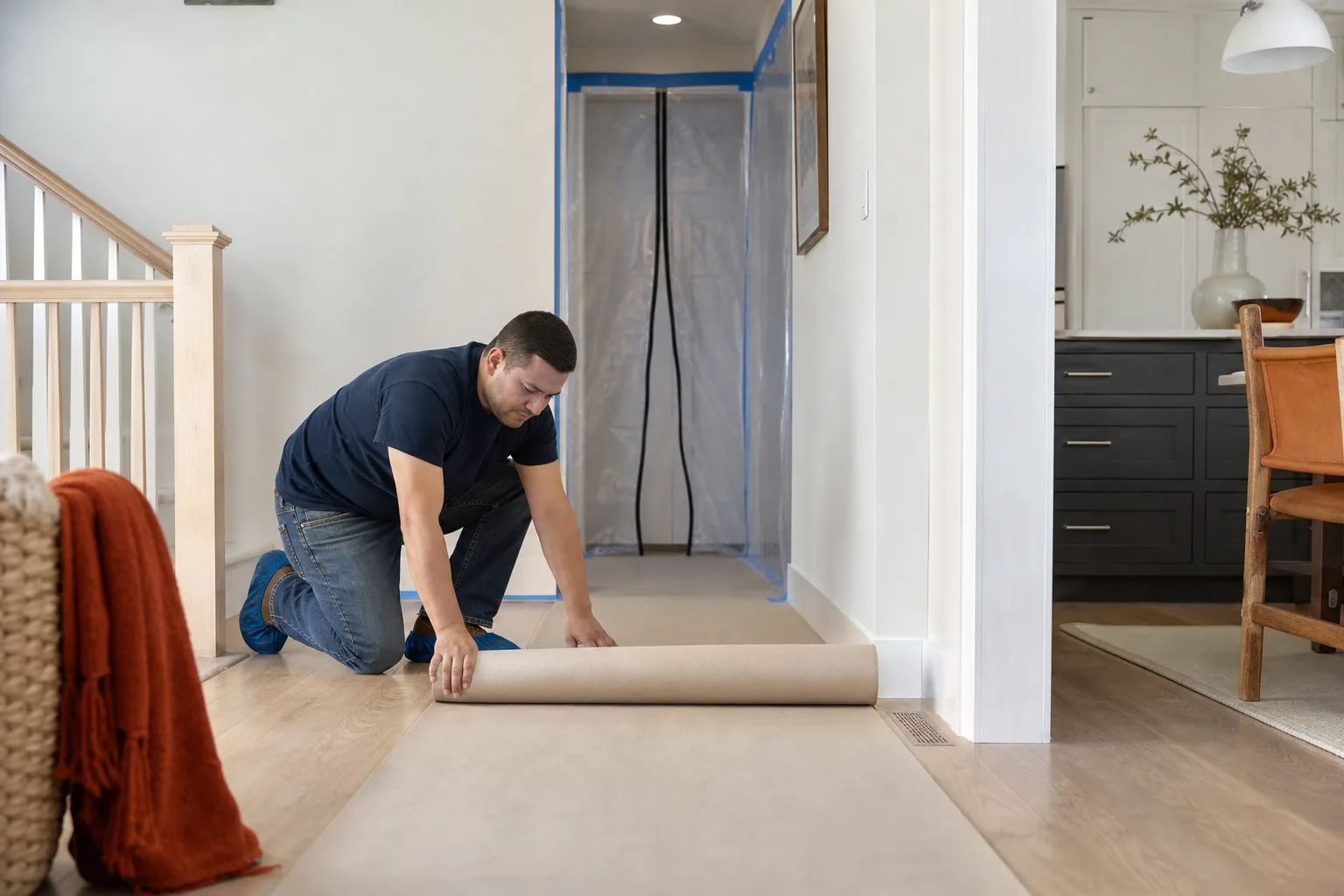
- Protect what stays. Ask your remodeler which floors, walls and appliances will be protected with plastic sheeting, moving blankets and zip-wall barriers. Dust travels farther than most homeowners expect.
The temporary kitchen should be functional, not elegant. Most households in North Las Vegas spend between three and six weeks in this setup when the remodel scope is cabinets, countertops and fixtures. Longer projects with layout changes push that to eight weeks, and preparation is what makes the difference.
What Should Your Water Shutoff and Plumbing Emergency Plan Include?
Before any plumbing work begins, every household member should know where the main water shutoff valve is located and how to turn it. In most North Las Vegas homes the main shutoff sits near the meter at the street or in a utility closet near the water heater. Find it, test that it turns freely, and tag it with a bright piece of tape so anyone can find it in a hurry.
A complete plumbing emergency plan covers six items:
- Main shutoff location and function. Confirm the valve closes fully. If it is stiff or leaking, ask a plumber to replace it before demo begins.
- Fixture shutoffs. Every sink and appliance valve under the kitchen area should be labeled. Older valves in some North Las Vegas neighborhoods stick or fail; testing them now is cheaper than discovering it mid-project.
- Who to call and when. Your remodeling company should have a documented process for plumbing emergencies during the work phase. Ask which number to call, and write it on a card near the temporary kitchen setup.
- Water heater valve. Know where the valve on your water heater sits and how it works. If a plumbing line is cut during the remodel and drains the system, closing this valve limits the mess.
- Floor drain or bucket plan. If plumbing is disconnected for several days, keep shallow pans under open lines and check them morning and night.
- Document before work begins. Photograph the existing plumbing and cabinet layout. If a leak happens later in the project, before-and-after photos clarify what changed.
Water damage during a remodel almost always traces to two causes: a valve that was not closed completely, or a line that was capped and then pressurized by accident. A written shutdown checklist prevents both. This is one place where a dedicated kitchen remodeler earns their keep. Because kitchen remodeling is the only work we do, we build shutdown and restoration steps into the project schedule rather than discovering them mid-stream.
How Do You Handle Heat Emergencies During a Summer Kitchen Remodel?
Heat is the emergency most North Las Vegas homeowners underestimate. When the kitchen is gutted and cabinets are removed from exterior walls, a small gap in the home’s thermal envelope opens up. Cooled air leaks out. Hot air comes in. In June, July and August, this can push indoor temperatures several degrees higher in adjacent rooms and much higher near the open wall itself.
Prepare a heat protocol before summer demo. We recommend these steps:
- Seal openings at end of day. Ask your remodeler to close open wall cavities with temporary sheathing or plastic at the end of each work day. This matters more than most homeowners realize because the system that usually cools the home was not designed to have the kitchen wall open.
- Relocate a window AC unit. If your kitchen has a window AC, plan where it will sit once that window is removed or blocked. A portable floor unit in the temporary kitchen area keeps that room livable.
- Understand your AC load. With the kitchen wall open, the central AC has to work harder. Keep interior doors closed and use fans to move air. Do not run the oven or stove for long periods during the hot weeks.
- Identify a cooling-off location. Know a nearby community center, library or family member’s home where the family can spend the hottest afternoons if indoor temperatures become uncomfortable, especially with young children or older adults in the household.
- Watch for heat illness signs. Headache, dizziness, nausea and confusion are warning signs. Move anyone experiencing them to a cooler location and seek medical help.
- Schedule heavy work early. Coordinate with your remodeling team so the hottest parts of the day are not when the kitchen wall is fully open.
Heat preparation matters most in North Las Vegas homes built decades ago in neighborhoods like Aliante and the older sections near downtown, where insulation and window performance are often less than current standards. It also matters in newer builds where the AC system was sized to a closed layout. Fast dispatch from 7am to 7pm is available six days a week (closed Saturday) if conditions push the project into urgent territory. The phone line is a good place to ask questions before a hot week.
What Should You Document for Insurance Before Demo Begins?
Photograph and video every room that will be touched by the remodel before any work begins. This is the single most important insurance step, and it takes an hour. Walk through with a phone camera and capture the cabinet interiors, the countertops, the appliances, the under-sink plumbing and the flooring beneath the kitchen. Save the files to cloud storage, not just the phone.
Beyond photos, keep these documents in one folder:
- The signed contract, including scope of work and change-order process.
- The remodeler’s certificate of insurance and licensing information.
- Serial numbers and purchase dates for existing appliances, if they are staying.
- Your homeowner’s policy declaration page and the agent’s contact number.
- A short list of pre-existing conditions (small scratches, worn seals) so they cannot later be mistaken for remodel damage.
Call your insurance agent before demo. Explain the scope of work and ask two specific questions: does the policy cover damage caused during construction, and does anything need to be endorsed before work starts. Many homeowner’s policies cover perils like fire and water escape during a remodel, but coverage of the work itself usually depends on the remodeler’s policy. Getting both answers in writing before demo starts is what keeps a surprise from becoming a claim dispute. Document each stage of the project as it moves forward, and email your agent if any scope change expands the work.
What Should Your Contract Say About Mid-Project Emergencies?
Before you sign, make sure your contract names a project manager and a backup contact. Both numbers should be written into the scope and shared with your household. Good communication is the difference between a small issue handled the same week and a large one that grinds the project to a halt.
Ask for these five items in writing:
- Primary contact and backup contact. The business phone number plus the name of the project manager and their direct line. Confirm how calls are routed outside normal working hours and how quickly a response should be expected.
- Definitions of a stoppable issue versus an urgent issue. A stoppable issue is something that can wait until the next work day: a cosmetic flaw, a cabinet door that does not close smoothly, a color sample that looks different in the finished space. An urgent issue is something that risks safety or damage: an active leak, an exposed live wire, water backflow, or a partially installed cabinet that is not secure.
- Shutdown expectations. Who shuts the water off, who is authorized to disconnect and reconnect appliances, and whether the homeowner or the remodeler handles each.
- Change-order process. What has to happen if the scope changes mid-project. Every change should be written, signed and priced before work resumes.
- Daily cleanup policy. What “safe at end of day” means. Tools put away, open cavities closed, sharp edges covered, floor protected. Ask the remodeler to walk through the site with you at the end of the first day so you both know what to expect.
In our experience, most mid-project emergencies were avoidable with a clearer contract and a five minute daily walk-through. When we handle cabinet installation as part of a full kitchen project, this communication framework is built into the schedule from the first day of demo so nothing catches the household by surprise.
What Are the Electrical Safety Rules During the Open-Wall Phase?
Never touch exposed wiring, even briefly, even to “just check” what is behind a wall. Electrical panels and open wiring are among the most dangerous parts of any kitchen remodel. If a circuit is acting incorrectly, or if a fixture has been removed and the wires are exposed, step away and call a licensed electrician or your remodeling contact. The most common electrical mistakes happen when homeowners move an appliance, reset a breaker they should not touch, or plug something into a circuit that was already dedicated to a kitchen appliance.
Safety rules we ask households to follow during the open-wall phase:
- Keep the panel accessible at all times. Do not stack boxes, furniture or construction materials in front of it.
- Do not plug extension cords into kitchen circuits being worked on. Run dedicated power from an outlet in another room.
- Confirm that any live circuit in the work zone is clearly labeled. Ask your remodeler for this at the start of each week.
- Keep children and pets well clear of open walls, especially after work hours.
- If a breaker trips and does not reset cleanly, call for a professional. Repeated tripping is a warning sign.
Electrical work in older North Las Vegas homes is sometimes more involved than expected because wiring runs longer distances and the panel may be near capacity. A well-managed project catches this before it becomes urgent, and a licensed electrician should always make the final connections.
How Long Does a North Las Vegas Kitchen Remodel Take, and When Is the Risk Highest?
Most kitchen remodels in North Las Vegas take four to eight weeks once demolition begins. The riskiest phase is not the finish work. It is the opening phase, when cabinets are out and the wall is open, and the schedule can drift if materials are late.
Here is the approximate phase timeline most homeowners should plan for:
- Weeks 1-2: demolition and rough-in. Cabinets come out, plumbing and electrical are exposed, framing is adjusted. Highest water, power and heat risk during this phase.
- Weeks 3-4: cabinet installation. KraftMaid and Wellborn cabinetry typically lands here if the order was finalized before demo. Coordination with countertop templates matters at this point.
- Weeks 5-6: counters and fixtures. Cambria, Silestone or Caesarstone slabs are templated and installed, then Kohler, Moen or Blanco fixtures go in.
- Weeks 7-8: finishing, inspection and walk-through. Paint, trim, appliance reconnection and final checks.
Heat risk peaks in weeks one through three if you are remodeling between May and September. Water risk is highest the same weeks, since plumbing lines are open and the shutoff status of each valve matters. Insurance risk runs across the whole project – document early and often. The temporary kitchen serves through the full range of the schedule, and the household usually gets comfortable with the setup by week two.
Common Mistakes to Avoid
- No temporary kitchen plan. “We’ll just eat out” turns into four weeks of takeout bills and fatigue. Set up the temporary kitchen the week before demo, not after.
- Not testing the main water shutoff. A stiff valve becomes a real problem when a line is cut. Confirm the valve closes fully before the first day of plumbing rough-in.
- Forgetting to seal the wall at end of day. In North Las Vegas heat, an open kitchen wall on a summer evening pulls hot air into the home. Ask for end-of-day sealing in writing.
- No insurance photos. Without before photos, an insurance claim during a remodel can turn into a negotiation. Take the walk-through photos the day before demo.
- Assuming your remodeler handles HVAC. Most kitchen remodelers protect the thermal envelope; they do not repair HVAC. Know who to call if a summer project pushes your AC beyond what it can handle.
- Texting instead of calling for an urgent issue. An active leak does not wait for a reply. Call the project number, and call again if you do not reach someone.
- Not specifying change-order rules. Small changes add up. If the contract does not say how changes are priced and documented, a minor shift in plan can become a major budget surprise.
See the difference
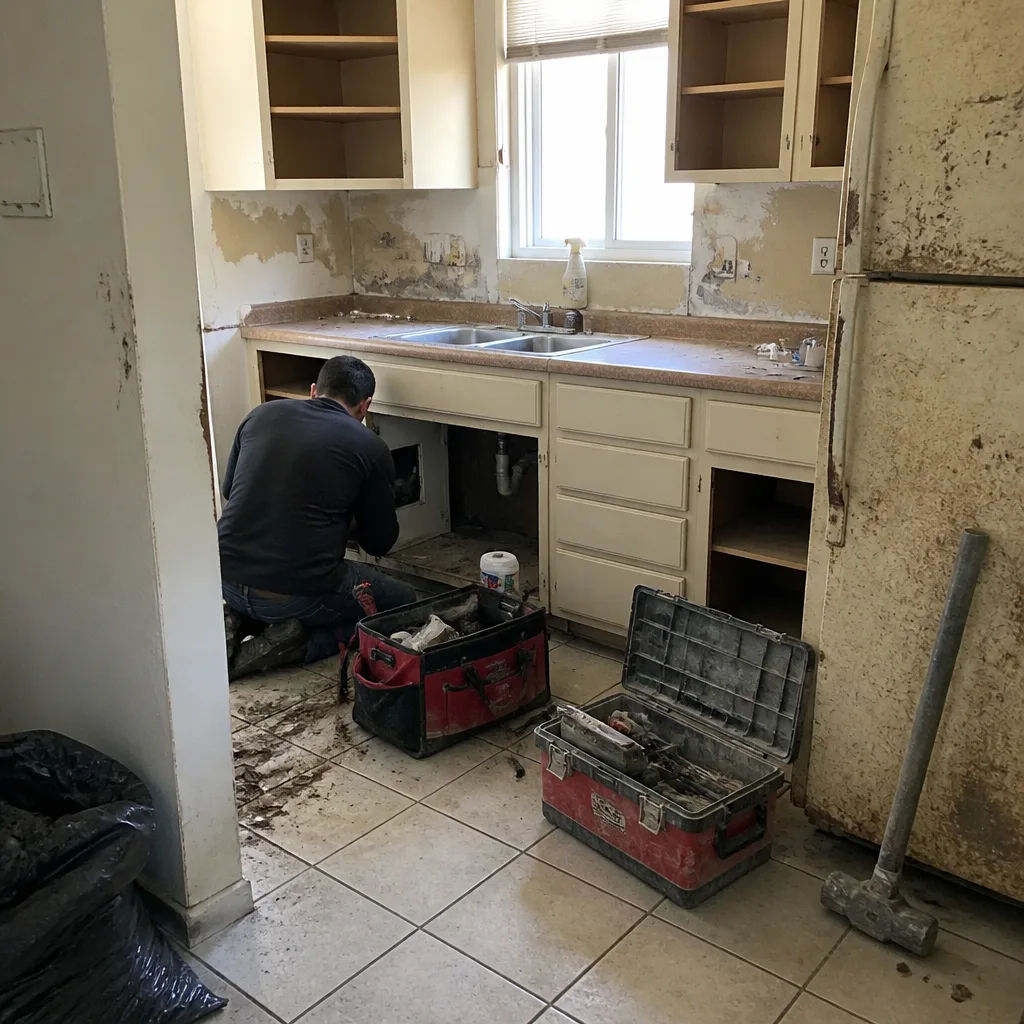 Before
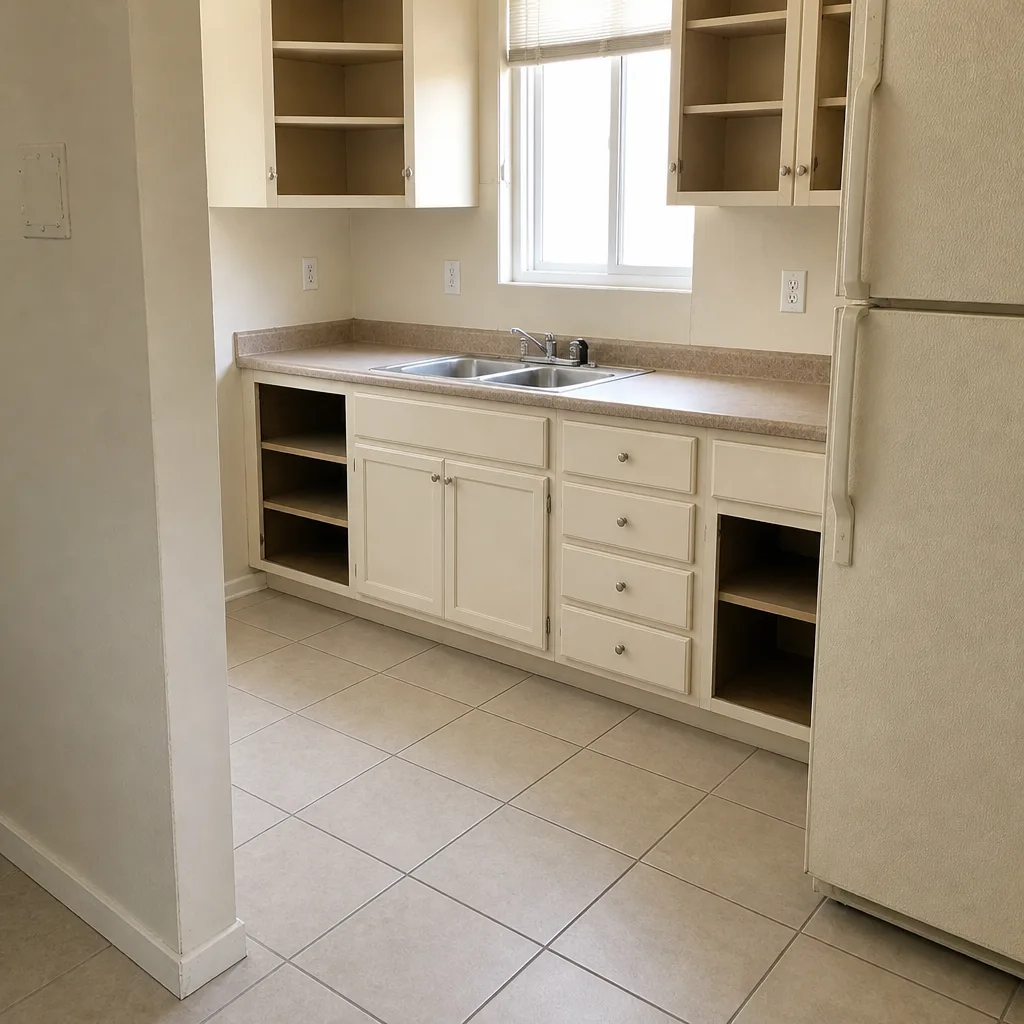 After
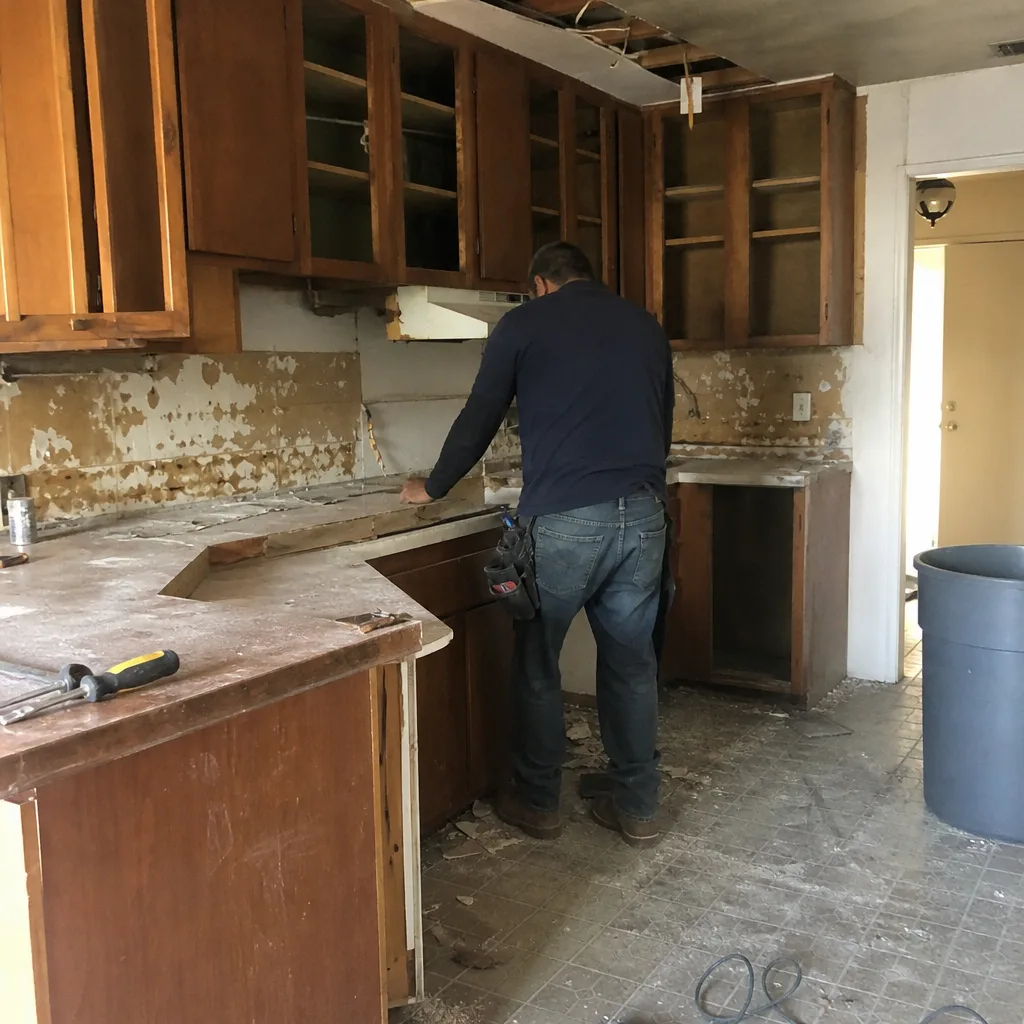 Before
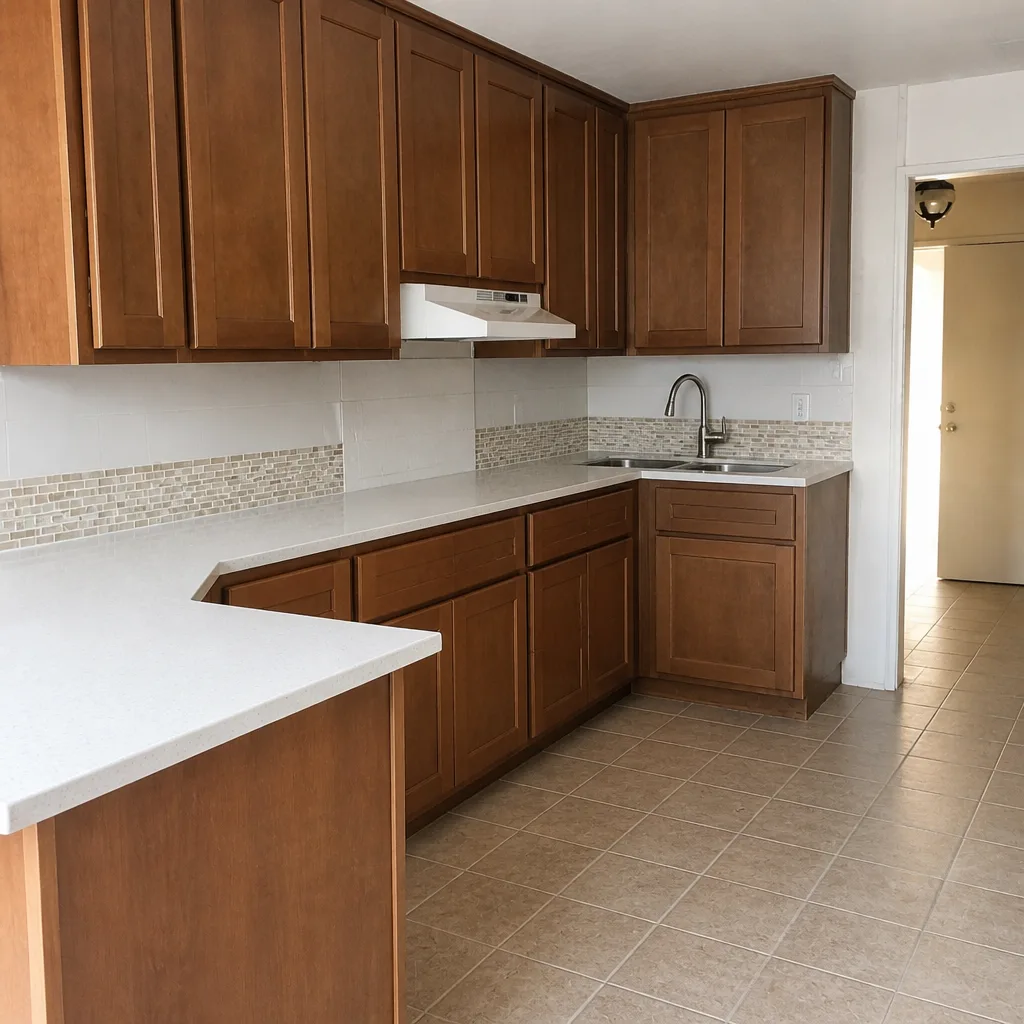 After
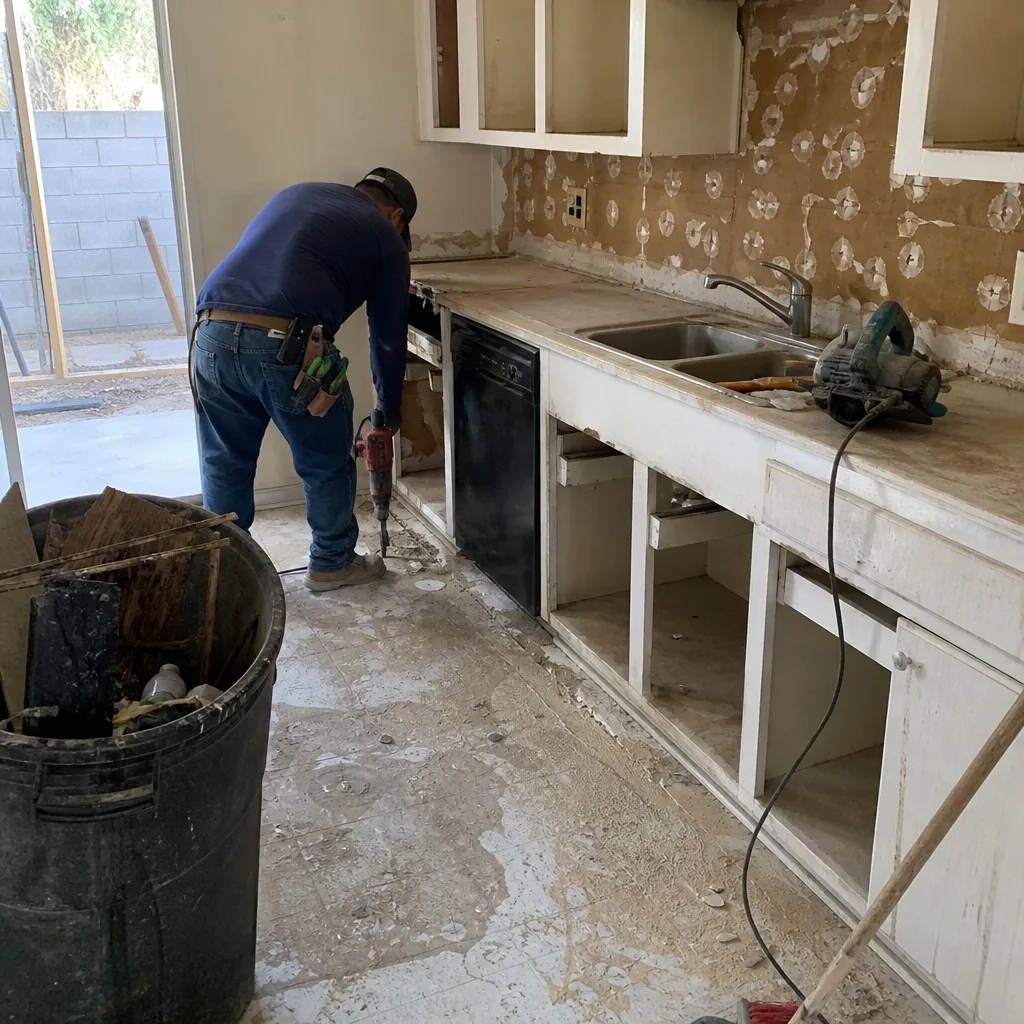 Before
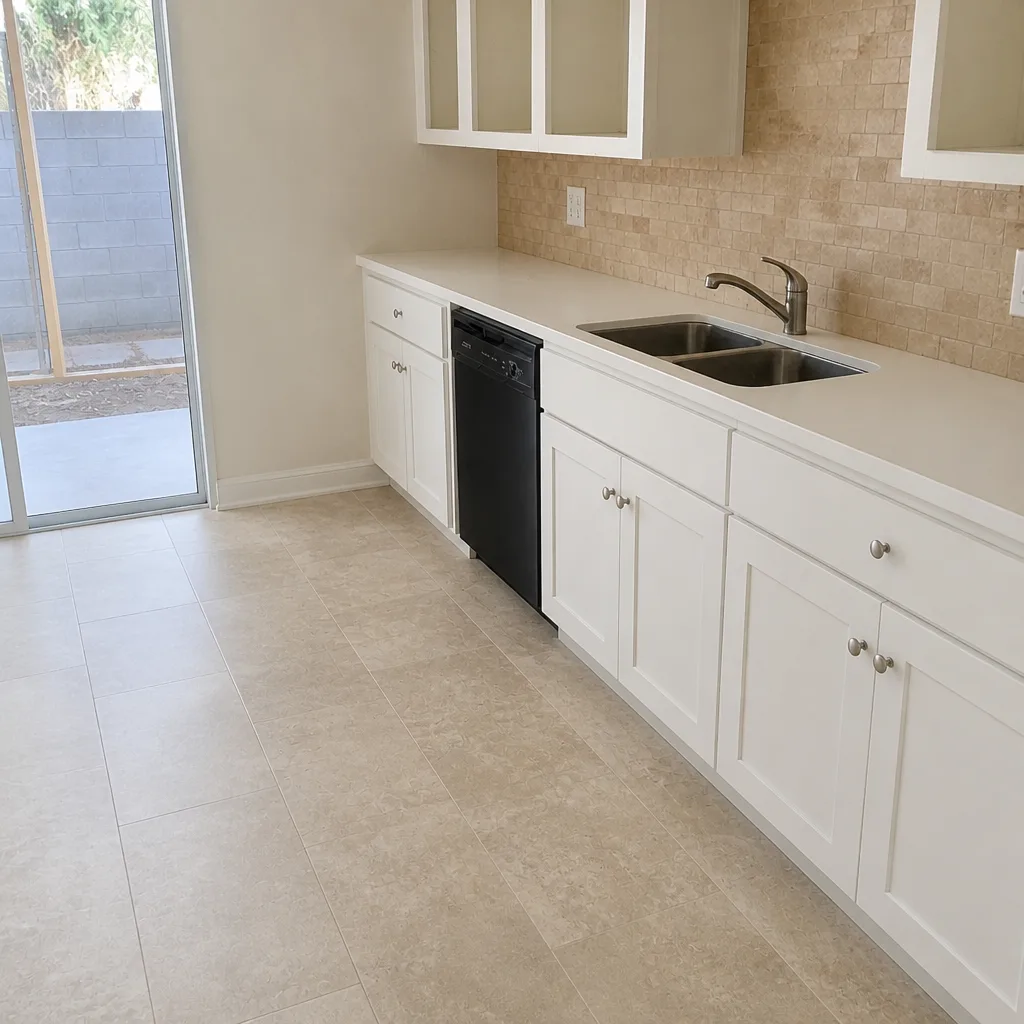 After
When to Call a Professional
Call a professional before demo, not after, if any of these apply: your main water shutoff is stiff or unreliable, your kitchen wall runs along an exterior wall you rely on for cooling, your home was built before modern insulation standards, or you are remodeling between May and September in North Las Vegas. The planning steps in this guide work best when they are built into the project schedule by the company doing the work. A licensed kitchen remodeler can confirm shutdown procedures, coordinate inspections and make sure temporary protection is in place from day one. If a plumbing line is opened during the work and you are unsure how to shut it down, call an emergency plumber and then notify your remodeler. Kitchen Remodel North Las Vegas offers free estimates in North Las Vegas – call (833) 620-5631. We answer 24/7. Fast dispatch from 7am to 7pm, Sunday through Friday.
Frequently Asked Questions
Most North Las Vegas households lose the main kitchen for four to eight weeks, with the longer end for projects that move plumbing or change the layout. Set up a temporary kitchen before demo starts and plan on six weeks as a realistic midpoint. Call (833) 620-5631 for a schedule that fits your scope – the estimate is free.
Most households in North Las Vegas stay home during a kitchen remodel, provided a temporary kitchen is set up and heat protocols are in place for summer months. Moving out becomes worth considering if the project opens an exterior wall for more than a few days during the hottest weeks or if someone in the household has health conditions that make heat difficult to manage.
Shut off the main water valve first, then call your remodeling contact. If the leak is coming from a broken fixture or an appliance line you cannot isolate, call an emergency plumber as well. Document the leak with photos before cleanup so that any insurance conversation later has a clear record.
Most homeowner’s policies respond to sudden events like fire or water escape during a remodel, but damage to the work itself is typically handled by the remodeler’s policy. Call your agent before demo, confirm what is and is not covered, and get the answer in writing. Photo-document the whole project from the first day.
A portable induction cooktop, a microwave, a fridge or insulated cooler with daily ice, a wash station with a drain, and one set of dishes per person cover the essentials. Keep the setup out of the garage during summer, where heat makes food storage unsafe. A refrigerator moved early to a working outlet outside the demo zone saves a lot of hassle.
Call your remodeling company first, then an emergency plumber if the issue is active. Both numbers should be written into your contract and posted near the temporary kitchen. Confirm the process before demo begins so no one has to look up contacts with water on the floor.
Most kitchen remodels that move plumbing or electrical lines require permits in North Las Vegas, and your remodeler should pull them. Ask who pulls permits and who confirms inspections before signing. Permits protect you at resale and, more importantly, confirm that work is inspected along the way.
The Bottom Line
A kitchen remodel does not have to be a household emergency, but it will be if nothing is prepared before demo. The essential checklist: temporary kitchen set up the week before, main water shutoff confirmed and tagged, end-of-day wall sealing agreed in writing for summer projects, insurance photos and a call to your agent, and a contract that names the project manager, backup contact and change-order rules. The finish you choose – whether it is KraftMaid cabinetry, a Cambria countertop or a Blanco sink – matters far less than what you prepare for the weeks in between. A focused kitchen remodeler in North Las Vegas builds this preparation into the project from the first day. If you are planning a kitchen remodel and want to see what your project looks like from start to shutdown-ready, Kitchen Remodel North Las Vegas offers free estimates – call (833) 620-5631. We answer 24/7. Fast dispatch from 7am to 7pm, Sunday through Friday.
Written by the team at Kitchen Remodel North Las Vegas.