Last updated November 18, 2026






Free design consultation - KraftMaid and Wellborn cabinet lines, Cambria and Silestone surfaces, and every tier from refacing to full custom laid out side by side
Kitchen Remodeling Troubleshooting in North Las Vegas: Common Problems and How to Fix Them
If your cabinet doors are already sagging six months after your remodel wrapped, the problem isn’t the hinges. It’s almost certainly that your installer didn’t account for North Las Vegas’s humidity swings when setting the cabinet boxes. That’s the counterintuitive truth about most kitchen problems: they look like material failures but they’re actually installation failures, baked in long before you noticed the symptom. This guide walks through the specific failures we see most often in North Las Vegas kitchens, how to diagnose the real root cause, and how to fix each one so it stays fixed.
Quick Answer
Most kitchen remodeling problems in North Las Vegas trace back to three root causes: cabinets installed without accounting for the Mojave climate’s humidity swings and wall framing irregularities, countertop seams set with adhesives that fail under high heat, and grout laid over a substrate that flexes near the range. Diagnose the root cause before you replace parts. Replacing hinges on misaligned cabinets, for example, wastes money if the boxes were never shimmed and leveled correctly. When the fix requires reopening finished work on warranty-backed products like Cambria quartz or KraftMaid cabinetry, use a licensed specialist to protect the manufacturer warranty.
Styles & brands we work with
- Shaker
- Modern flat-panel
- Two-tone cabinets
- KraftMaid
- Cambria quartz
- Butcher block
- Open shelving
Table of Contents
- Why Do Cabinet Doors Sag and Misalign in North Las Vegas?
- Why Do Quartz and Stone Countertop Seams Fail in High-Heat Kitchens?
- Why Does Grout Crack Near the Range, and How Do You Fix It?
- Is That Persistent Kitchen Odor Actually a Ventilation Problem?
- DIY Fix vs. Licensed Specialist: When Does Reopening Work Void a Warranty?
- How Do You Prevent These Problems Before They Start?
- Why North Las Vegas Framing and Climate Drive So Many Kitchen Problems
Why Do Cabinet Doors Sag and Misalign in North Las Vegas?
Cabinet misalignment in the Mojave climate is a framing and shimming issue, not a hardware issue. That’s the short answer, and it matters because homeowners routinely buy replacement hinges when the actual fix is a five-minute adjustment of the cabinet box.
Here’s how to tell the difference. If your doors hang crooked but the gaps between them are consistent, the hinges probably do need adjustment. If the gaps vary from top to bottom, or if one door contacts the frame while its neighbor has a gap, the cabinet box itself is out of plumb. New hinges won’t fix that.
Why does this happen in North Las Vegas specifically? Three reasons stack up:
- Humidity swings. The desert isn’t uniformly dry. Our summer monsoon season brings short, sharp jumps in humidity, and the transition from monsoon to the dry fall is the biggest swing of the year. Wood cabinet boxes expand and contract with that cycle. An installer who didn’t leave correct expansion room at the walls or shimmed the box against a slightly moving wall will see doors shift within a season.
- Wall framing irregularities. North Las Vegas has a lot of newer construction, and production framing isn’t always plumb. Studs can bow slightly, and walls can be out of plane by a quarter inch over a few feet. If the installer screwed the cabinet box straight to a bowed wall without shimming behind it, the box twists.
- Frameless cabinet construction. Many modern cabinets have no face frame, which looks cleaner but has less structural tolerance for an unlevel wall. A frameless KraftMaid or Wellborn cabinet still needs precise shimming at every mounting point. Skimping on shims amplifies every wall irregularity.
The fix depends on the root cause. For a slightly out-of-plumb box, a specialist can shim behind the mounting points and re-level it. For a box that’s bowed from wall pressure, the cabinet may need to come off, be re-shimmed, and be reset. When the cabinet carries a manufacturer warranty, that work warrants a professional touch. Call (833) 620-5631 for a free estimate on diagnosing cabinet misalignment in North Las Vegas.
Why Do Quartz and Stone Countertop Seams Fail in High-Heat Kitchens?
Countertop seam failures in North Las Vegas are almost always adhesive-related, and heat is the accelerant. Where a seam splits, opens, or shows a dark line within a year of installation, the culprit is typically an adhesive applied without accounting for thermal movement.
Quartz surfaces like Cambria, Silestone, and Caesarstone are engineered stone: resin-bound, and they expand and contract with temperature changes. Natural stone behaves differently, but both move slightly. In a North Las Vegas kitchen where a countertop sits near a range or under a window that takes direct summer sun, the temperature near the seam can climb well above the ambient room temperature. If the installer used a rigid adhesive with no flexibility, the movement between the slab sections has nowhere to go. It concentrates at the seam and pulls it apart.
The adhesive matters as much as the install method. What actually holds in a high-heat Nevada kitchen:
- Flexible, color-matched epoxy adhesive made for stone and quartz, not general-purpose construction adhesive. Epoxy has enough give to absorb minor thermal movement while maintaining the bond.
- Proper seam placement. Seams should be placed away from heat sources where possible, and never directly behind or beside a range hood or cooktop.
- Correct clamping during cure. A seam clamped at the wrong pressure or removed too soon cures with a weak bond that opens later.
- Seam alignment with substrate. A seam should sit over solid substrate, not a gap in the cabinet top. A seam over a substrate gap has no support and flexes every time a heavy pot sits on it.
If you’re seeing a failing seam on quartz from a brand like Cambria, using a non-authorized or non-specialist repair can create warranty complications. Quartz manufacturers typically specify trade installation standards. Reopening a seam improperly can affect coverage on the whole slab. For seam repairs on quartz or natural stone, call (833) 620-5631 for a free estimate.
Why Does Grout Crack Near the Range, and How Do You Fix It?
Grout cracking near the range is a substrate flex problem, not a grout quality problem. This is the one homeowners spend the most money on and fix the least effectively, because the instinct is to regrout with a fancier grout. Better grout over the same flexing substrate cracks again within months.
Here’s what’s happening. Kitchens have specific flex zones. Near the range and near the dishwasher, floor and backsplash surfaces take more stress from heat, moisture, and foot traffic. If the substrate under the tile or backsplash is a thin material or a surface that wasn’t fully secured to the framing, it flexes. Grout is rigid. When the substrate moves and the grout doesn’t, the grout cracks along the plane where the movement concentrates.
How to tell a flex problem from a grout problem:
- Cracks follow a line, not a random pattern. Flex cracks cluster along joints or seams in the substrate underneath. Random cracking usually points to grout mix problems.
- Cracks return immediately after regrouting. If new grout cracks within weeks, the substrate is moving.
- Cracks appear only near heat or water. Localized cracking near the range suggests heat-driven expansion of a substrate that wasn’t isolated properly.
The fix that doesn’t require retiling is to address the substrate at the crack zone. It’s not a cosmetic repair. On a backsplash, a specialist can often reinforce the substrate behind the crack off the wall, using adhesive and fasteners, and then use a flexible sealant with color-matched grout at that specific joint instead of rigid grout. On a floor, substrate flex near heat sources can sometimes be addressed by injecting structural adhesive under the tile and letting it cure, which bonds the flexing section to the concrete or subfloor below.
When the substrate can’t be reinforced without removal, retiling the affected section is the honest fix. Regrouting rigid grout over a moving substrate is a repeated cost with no lasting result. A licensed specialist can assess whether the substrate is addressable in place. Call (833) 620-5631 for a free estimate.
Is That Persistent Kitchen Odor Actually a Ventilation Problem?
If your kitchen has a persistent odor, greasy cabinet residue, or condensation on the walls, it’s often a ventilation problem. Most generalist contractors misread this as a cleaning or cooking habit issue and never investigate the exhaust system.
Ventilation problems hide behind common symptoms. Here’s what to look for:
- Greasy residue on upper cabinet faces. Cooking aerosolized oil that isn’t being pulled out of the room settles on surfaces. Greasy cabinet faces near the range, even after cleaning, is a sign the hood isn’t moving enough air.
- Persistent smell in the kitchen. Odors that linger for a long time after cooking, instead of clearing within minutes, mean the hood isn’t exhausting properly.
- Condensation on window glass or walls during winter cooking. Cooking produces water vapor too. If it isn’t vented, it condenses on cooler surfaces. North Las Vegas cools fast in winter evenings, so this symptom shows up even in a dry climate.
- Hood fan runs but air barely moves. A hood that’s running but not pulling is usually fighting a duct problem: too many elbows, a flex duct with kinks, an undersized duct run, or a damper that isn’t opening fully.
The fix requires a proper assessment. In many cases the hood itself is fine and the ducting is undersized for the hood’s air volume, or the duct run is blocked. Sometimes the hood needs to be reseated against the cabinet bottom to eliminate leaks around the unit, which is a common install issue on kitchen remodels. A specialist can check the airflow at the hood and at the exterior termination point and let you know what’s actually happening. Call (833) 620-5631 for a free estimate on ventilation diagnosis in North Las Vegas.
DIY Fix vs. Licensed Specialist: When Does Reopening Work Void a Warranty?
Many kitchen fixes are entirely safe and appropriate to handle yourself. Some reopen finished work on products that carry manufacturer warranties, and those are the ones to hand to a licensed specialist.
Safe DIY fixes:
- Adjusting cabinet door hinges with a screwdriver, provided the boxes themselves are plumb and level.
- Replacing a cabinet pull or knob.
- Re-caulking a sink perimeter with kitchen-safe silicone.
- Tightening a loose faucet handle on a Kohler or Moen fixture, which is a basic maintenance task the fixture manufacturer’s instructions typically allow.
- Cleaning and degreasing cabinet surfaces (cosmetic maintenance, not installation work).
Skip the DIY when the fix involves:
- Re-shimming or re-leveling cabinet boxes. This requires detaching and resetting cabinet units, which affects the cabinet warranty on products like KraftMaid and Wellborn.
- Reopening a countertop seam. That’s a trade installation and repair. Doing it wrong can cause visible damage and void coverage on Cambria, Silestone, or Caesarstone surfaces.
- Reinforcing a subfloor or substrate. Removing a section of finished floor or backsplash to access the substrate is a professional task.
- Rewiring or replacing a range hood motor or ductwork. Any change to the electrical side of ventilation is electrical work.
The principle is simple: cosmetic and hardware adjustments are usually safe to do yourself. Anything that reopens a finished, warrantied surface or structure should go to a licensed specialist. If you’re not sure which category your issue falls in, a specialist can tell you without charging you for a diagnostic. Call (833) 620-5631 for a free estimate.
How Do You Prevent These Problems Before They Start?
Prevention comes down to specific installation steps that only a kitchen-focused contractor protects. These aren’t exotic techniques. They’re standard practices that generalist remodelers skip when a kitchen is one item among many on a broad to-do list.
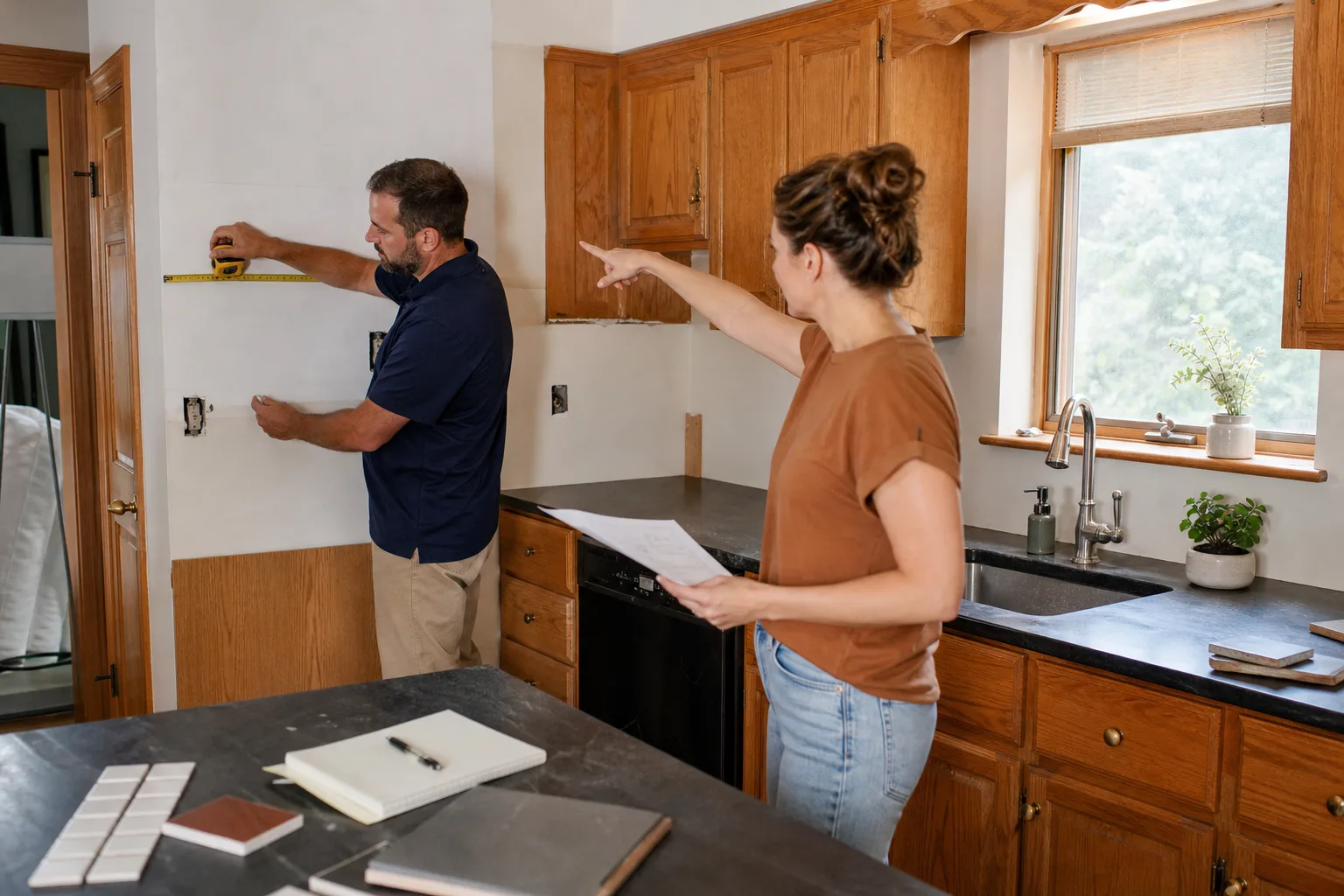
- Verify wall plumb before cabinets go in. A specialist checks studs with a level across the full cabinet run, not just at each mounting point. Bowed walls get shimmed so the cabinet box sits plumb regardless of what the wall does.
- Leave correct gaps at walls and ceilings. Cabinet boxes need space to move with humidity. Tight, screw-everywhere installations crack and bind.
- Place countertop seams intentionally. Seams go over solid substrate, away from heat sources, and use flexible color-matched epoxy. Seam placement is decided on the plan, not improvised at install.
- Isolate substrate near heat sources. Subfloor or backsplash substrate near the range needs to account for heat expansion. A flexible sealant at the range joint instead of rigid grout saves years of repeated repair.
- Check the exhaust system at the plan stage. Setting the hood air volume against actual duct length and elbows prevents a beautiful kitchen with a hood that doesn’t vent.
- Use brand-authorized installers for warrantied products. When cabinet and countertop lines carry product warranties, the installer’s authorization matters. Working with a cabinet installation specialist helps here.
Every kitchen remodel we handle is planned around these steps because the kitchen is the only room we remodel. That focus is what lets us anticipate the exact failure points before work starts. For a kitchen remodeling project done to install-correct standards, call (833) 620-5631 for a free estimate.
Why North Las Vegas Framing and Climate Drive So Many Kitchen Problems
North Las Vegas is a tough climate for kitchen materials, and the reason is the swing, not the heat. Homes here live through summer highs that push materials to expand, then overnight desert cooling and the monsoon-to-dry-fall transition that pull them back. Materials with different expansion coefficients – wood cabinets, quartz counters, ceramic tile, drywall – each respond at a different rate. That difference is where every crack and misalignment originates.
Framing here adds another layer. North Las Vegas has a lot of newer homes and some older neighborhoods around downtown and the surrounding blocks, and framing quality varies widely between construction phases. A kitchen wall that’s out of plumb by a quarter inch is invisible until you mount a straight cabinet run against it. Then every door shows the error. An installer who starts with a laser level and checks the full run before mounting anything catches that early. One who mounts cabinet by cabinet and only checks each one locally doesn’t. That’s the difference between cabinets that stay aligned for years and cabinets that sag in the first season.
Neighborhood context helps here too. Kitchens in the newer north-side subdivisions tend to have issues around production-grade framing and cheap original-install materials, while older kitchens tend to have issues around decades of substrate movement and non-standard rough openings from previous renovation. Both show up as the same symptoms. Both need the same root-cause diagnosis before anyone touches a part. A North Las Vegas specialist knows what to look for in each case. For more about the local market and what drives kitchen work here, see our North Las Vegas page.
Common Mistakes to Avoid
- Replacing hinges before checking cabinet box plumb. If the box is out of plumb, new hinges change nothing. Check the gaps between doors for consistency before buying hardware.
- Regrouting over a flexing substrate. Regrout cracks again in weeks. Reinforce the substrate first, then grout. Otherwise you’re paying twice for one problem.
- Ignoring the hood when there’s a persistent odor. Cleaning products won’t fix a duct problem. If greasy residue keeps forming near the range, check airflow, not the counters.
- Using rigid adhesive on quartz seams. Quartz like Cambria, Silestone, and Caesarstone needs a flexible color-matched epoxy. Rigid construction adhesive in a North Las Vegas kitchen will pull apart in the first hot season.
- Reopening warrantied work to save a service call. A re-shingled cabinet box or a reopened countertop seam done wrong can void the product warranty. A free estimate costs less than a voided slab warranty.
- Assuming a generalist contractor will catch installation issues. A remodeler who treats a kitchen as one line item among many skips the plumb check, the seam placement, and the exhaust plan. The symptoms show up later.
- Choosing installers who aren’t brand-authorized. When cabinets and counters carry manufacturer warranties, authorized installation protects coverage. Verify before work starts.
See the difference
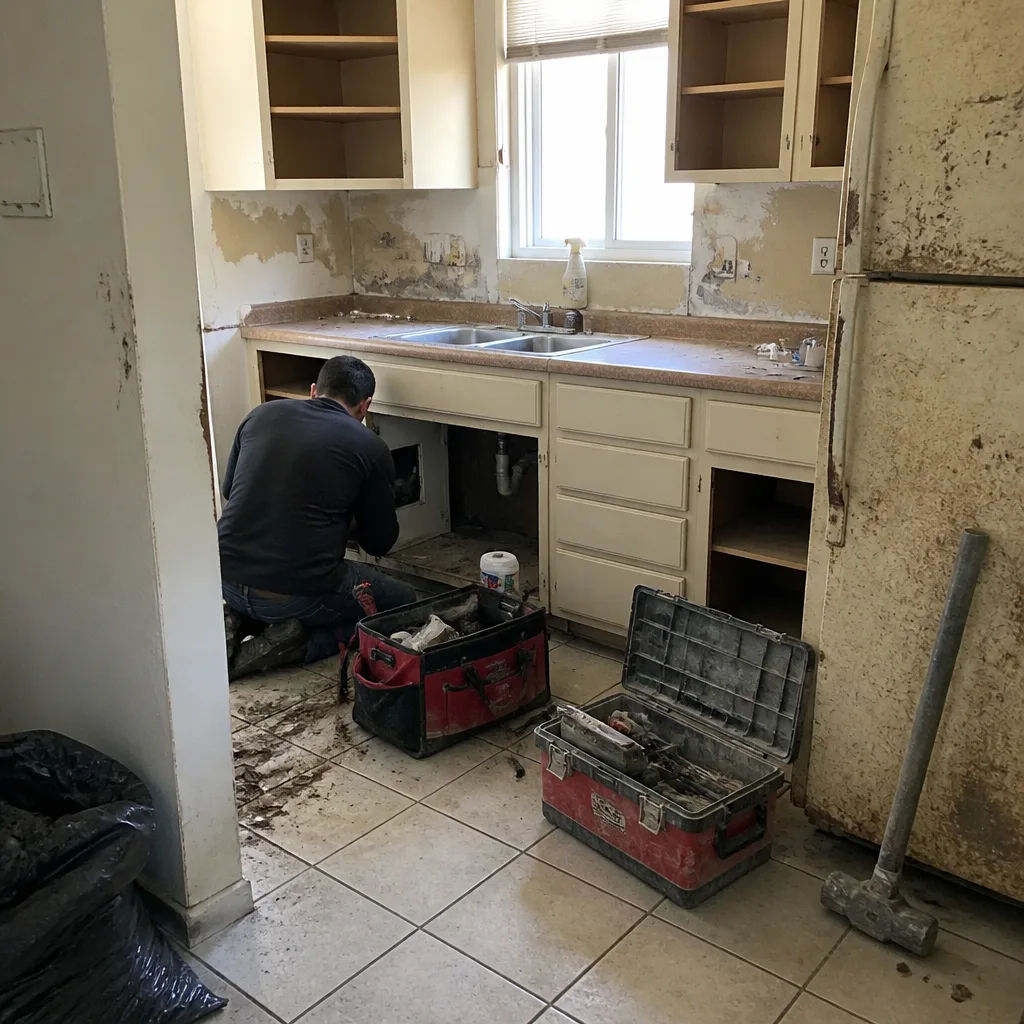 Before
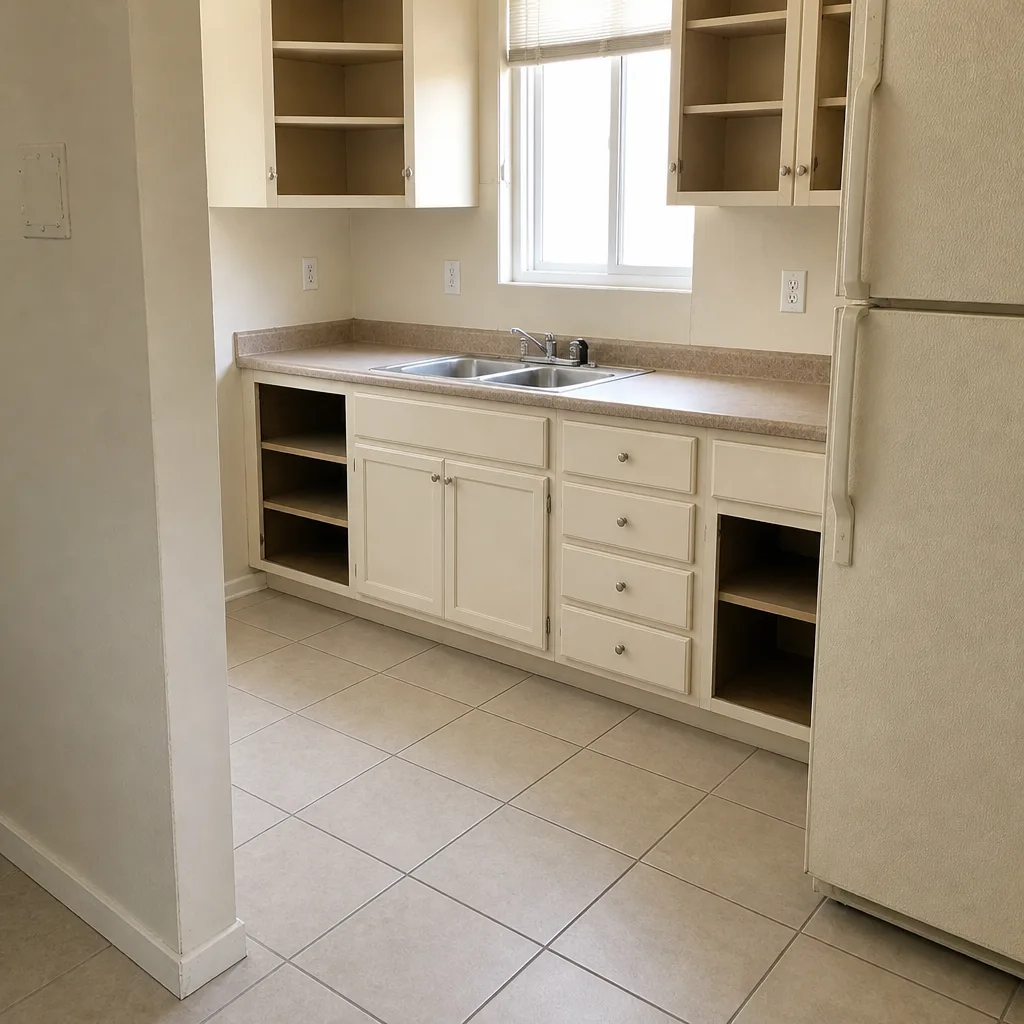 After
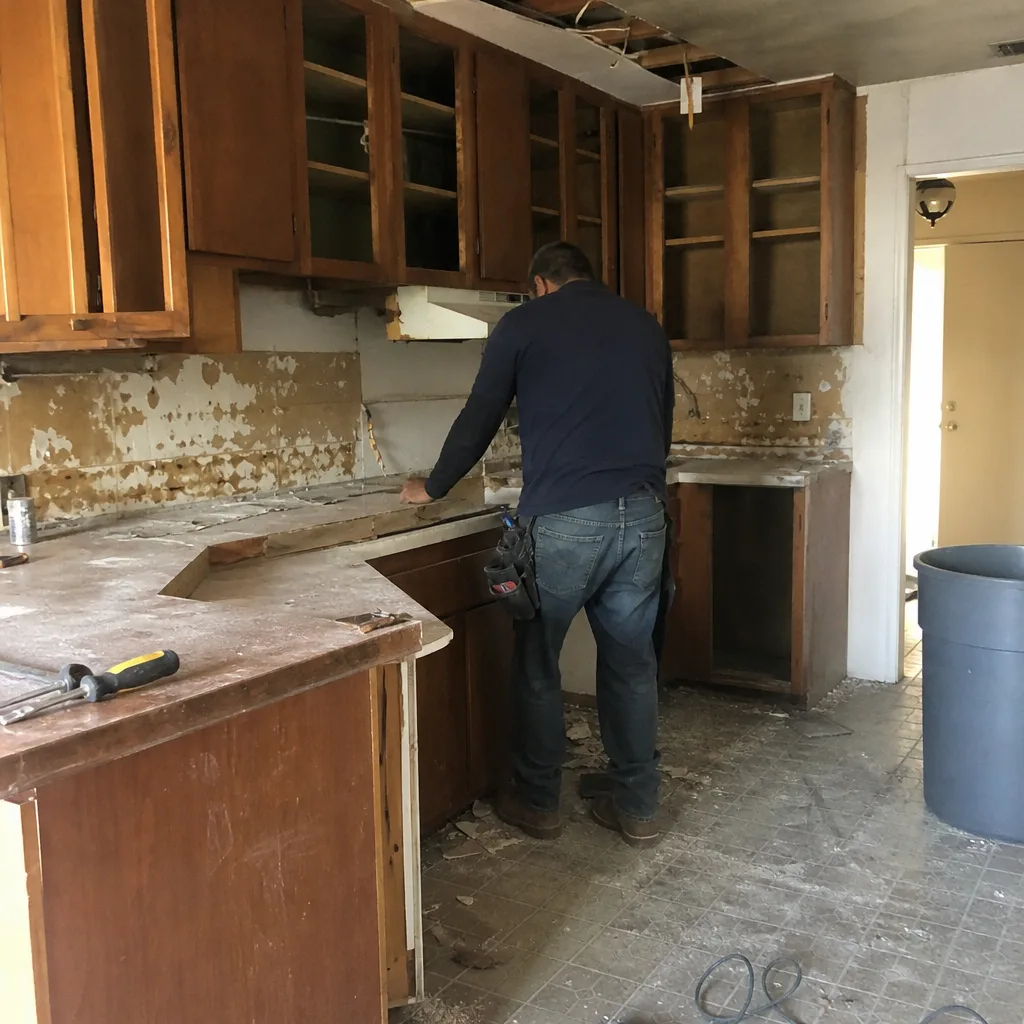 Before
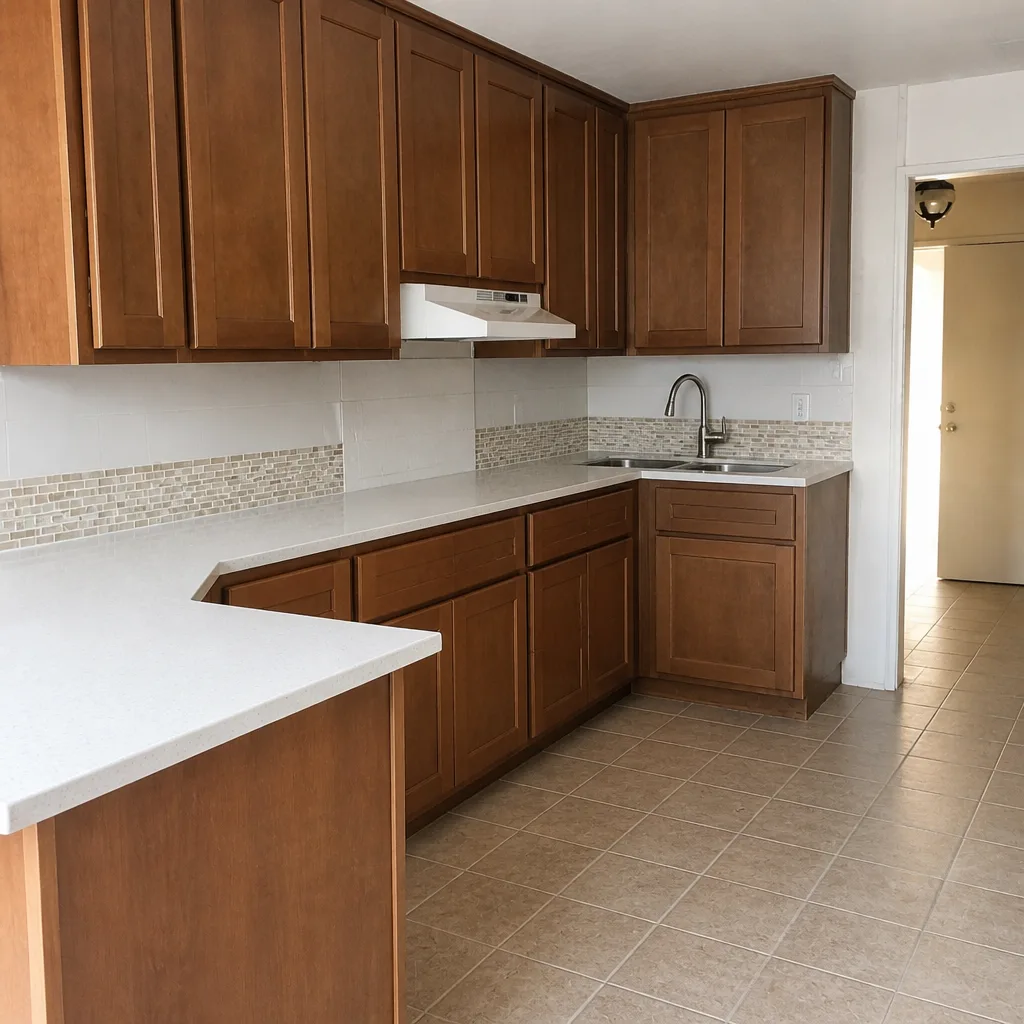 After
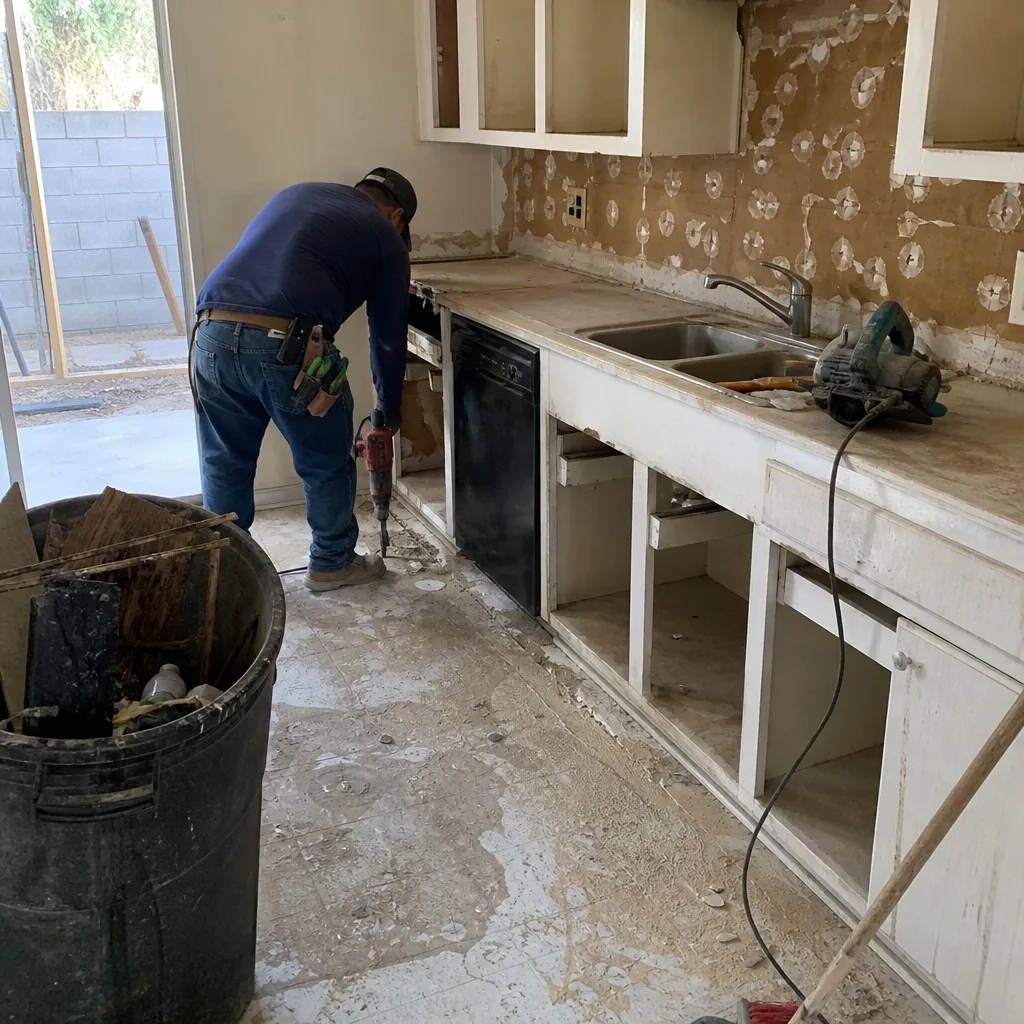 Before
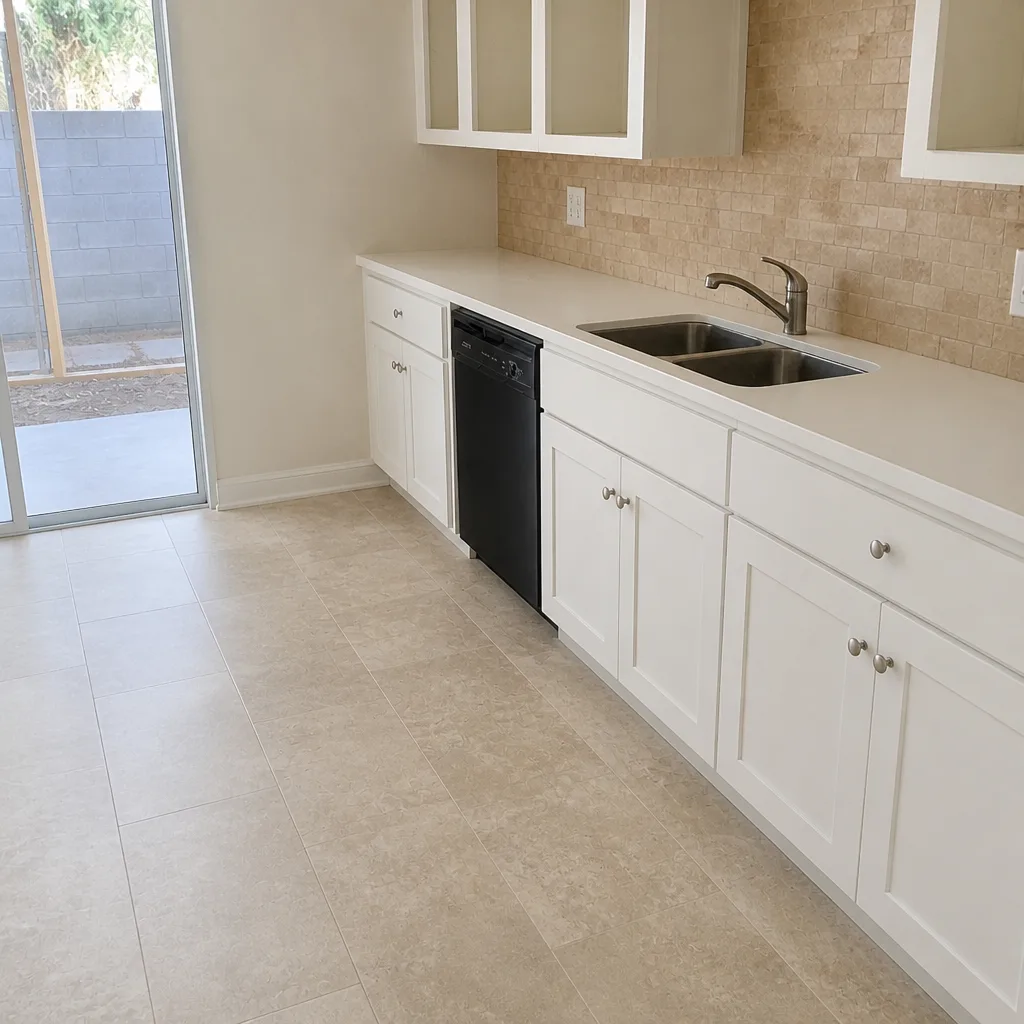 After
When to Call a Professional
Call a specialist when the symptom points to a root cause you can’t safely address yourself. That includes cabinets that are out of plumb at the box (not just at the hinge), countertop seams that have opened on quartz or natural stone, grout cracks that keep returning near the range, persistent kitchen odors that don’t clear, and any issue where the fix reopens a warrantied surface or structure.
You should also call when you’re not sure which category your issue falls in. A free estimate removes the guesswork without a charge. Our technicians have up to 14 years of experience diagnosing exactly these problems, and we work with brands like KraftMaid and Wellborn on cabinetry and Cambria and Silestone on surfaces, so the warranty side is handled as well. Kitchen Remodel North Las Vegas offers free estimates in North Las Vegas. Call (833) 620-5631.
Frequently Asked Questions
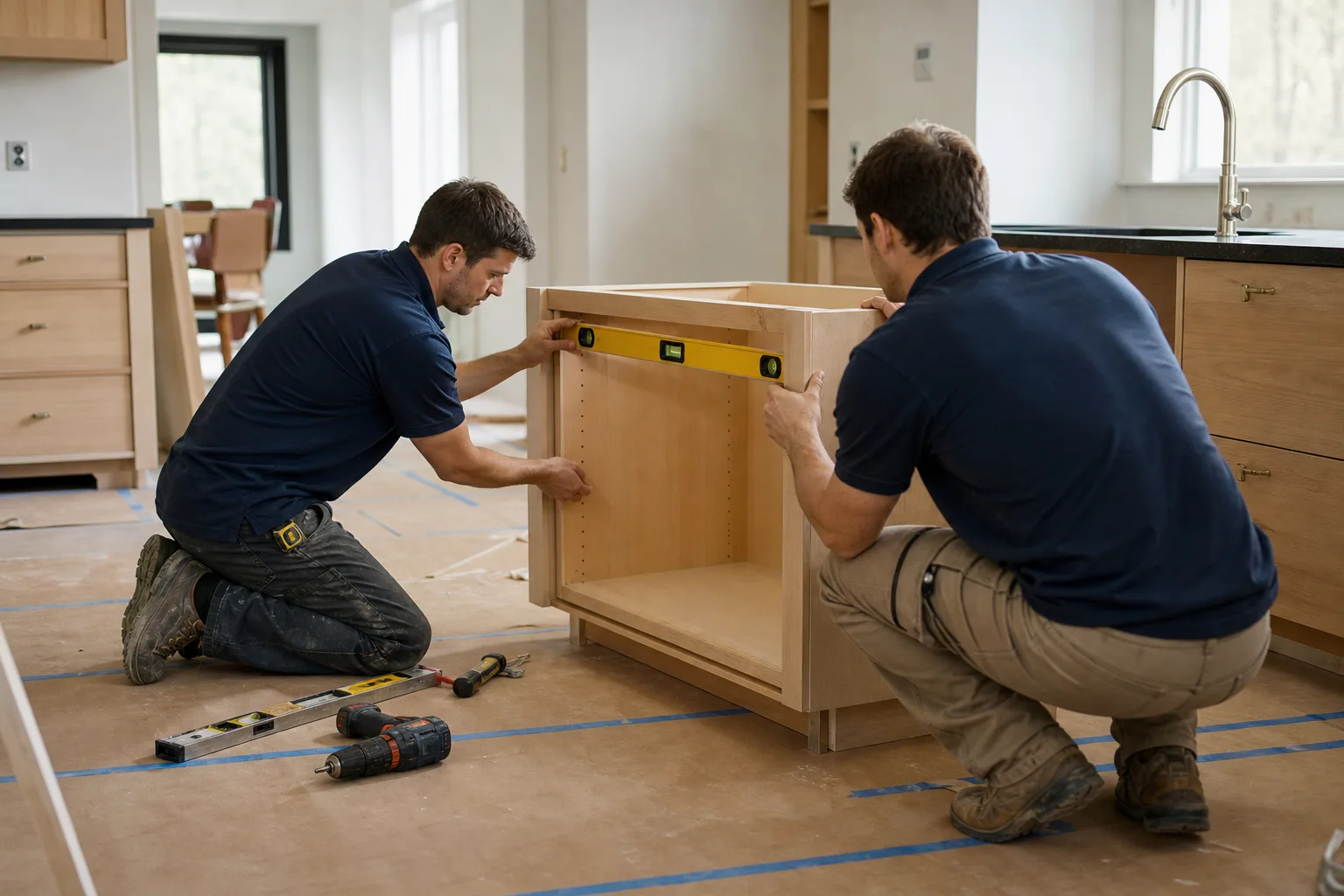
There’s no reliable flat rate because cabinet re-alignment in North Las Vegas depends on the root cause. A hinge adjustment is small work. Re-shimming a cabinet box that’s out of plumb is more involved, and re-setting a box that’s bowed off the wall costs more. The written estimate sets the final price, and the estimate itself is free. Call (833) 620-5631 to schedule yours.
Not automatically. Cabinet warranties cover manufacturing defects, not installation errors, and re-shimming is installation work. Whether a specific case falls under coverage depends on the cabinet brand’s warranty terms and the original installer’s authorization. Reopening the work yourself without checking can void coverage. The safest step is to have a specialist assess the cabinet and confirm what the warranty does and doesn’t cover before anyone touches the box.
You can, but it usually comes back. Cosmetic regrout over a flexing substrate cracks again in weeks to months. The lasting fix addresses the substrate behind the grout, which is professional work. If the crack returns after you regrout once, that’s the sign the problem is underneath. Call (833) 620-5631 for an assessment – the estimate is free.
Because the odor is coming from air that isn’t being vented, not from a dirty surface. If your range hood is running but not moving air, the duct is likely undersized, kinked, or blocked. Cleaning won’t change that. Have a specialist check the airflow at the hood and the exterior termination point. Call (833) 620-5631 for a free estimate.
In most cases the seam is repairable without removing the slab, provided the substrate under the seam is intact. The repair involves reopening the seam, cleaning it, and resetting it with flexible color-matched epoxy. If the substrate is compromised or the slab has cracked, the scope changes. A specialist can tell you which case you have on a free estimate. Call (833) 620-5631.
Ask for documentation before work starts. Authorized installers can show authorization for the specific brand and confirm the installation warranty terms that come with it. Anything less puts the product warranty at risk. We’re an authorized installer for KraftMaid and Wellborn and work with Cambria, Silestone, and Caesarstone, and confirmation is part of the free estimate. Call (833) 620-5631.
The Bottom Line
Nearly every kitchen remodeling problem in North Las Vegas traces back to an installation decision made before anyone touched the finished surface. Cabinet sag is a plumb and shim issue, not a hinge issue. Countertop seam failure is an adhesive and heat-movement issue, not a slab issue. Grout cracking near the range is a substrate flex issue, not a grout quality issue. Persistent odors are ventilation, not cleaning. And a DIY fix that reopens a warrantied surface on a KraftMaid cabinet or Cambria counter can cost more than the repair. Diagnose the root cause first, then fix it once. If the fix touches a warrantied surface or structure, call a specialist. Kitchen Remodel North Las Vegas offers free estimates. Call (833) 620-5631 to schedule yours. We answer 24/7. Fast dispatch from 7am to 7pm, Sunday through Friday.
Written by the team at Kitchen Remodel North Las Vegas.