
Last updated November 18, 2026






Free design consultation - KraftMaid and Wellborn cabinet lines, Cambria and Silestone surfaces, and every tier from refacing to full custom laid out side by side
Kitchen Remodeling Maintenance Checklist for North Las Vegas Homeowners
Most post-remodel checklists assume the enemy is time. In North Las Vegas, the enemy is the environment. The water coming out of your tap carries enough dissolved mineral to etch a new faucet finish, the sun through a west-facing window will fade a cabinet door faster than any wear pattern, and the dust that blows through the valley settles into grout lines and vent filters in ways a checklist written for a temperate climate never anticipates. A kitchen that’s beautiful on day one can look tired in three years if the maintenance plan ignores where it lives. What follows is the checklist we’d hand a friend after a remodel: what to do at 30 days, 6 months, and 1 year, and how to adjust the schedule for a desert house.
Quick Answer
A post-remodel kitchen maintenance plan in North Las Vegas needs four pillars: hard water control (aerators, filtration, resealing stone on a shorter cycle), UV and sun protection for cabinets and counters near south- or west-facing windows, dust and particulate management (door seals, vent filters, grout lines), and a structured 30-day, 6-month, and 1-year inspection to catch settling before anything is out of reach. Standard advice about “oil the cabinets and wipe the counters” misses the three factors that actually age a kitchen here.
Styles & brands we work with
- Shaker
- Modern flat-panel
- Two-tone cabinets
- KraftMaid
- Cambria quartz
- Butcher block
- Open shelving
Table of Contents
- Why North Las Vegas Kitchens Age Differently
- Hard Water: The Maintenance Task Most Checklists Miss
- Sun and UV Exposure: Protecting Cabinets and Countertops
- Dust and Particulate Infiltration in the Mojave Air
- Brand-Specific Maintenance: KraftMaid, Cambria, and Quartz Surfaces
- The 30-Day, 6-Month, and 1-Year Inspection Timeline
- Seasonal Kitchen Checklist for the Las Vegas Valley
- When Maintenance Becomes a Repair
Why North Las Vegas Kitchens Age Differently
Three forces act on a kitchen in North Las Vegas that don’t act the same way in most of the country. The first is water. The Las Vegas Valley draws from sources that leave behind heavy mineral content, and hardness readings over 300 ppm are common in many areas. That number matters because dissolved calcium and magnesium form scale on every wet surface: faucet aerators, sink drains, the interior of a dishwasher, and the sealed edges of a stone countertop where water sits. Scale is slow, quiet, and cumulative. Left alone, it dulls finishes and dulls the very surfaces you paid to have precise.
The second is sun. North Las Vegas sits at elevation and under a sky that delivers intense direct sunlight most of the year. A kitchen with a south-facing or west-facing window takes hours of UV load every afternoon. Cabinet finishes, especially painted or stained wood, and the resins in quartz surfacing respond to that light over time, and the difference between a protected and unprotected kitchen shows up as early as the third or fourth year.
The third is dust. The Mojave environment moves fine particulate through the air year-round, and it finds every gap. Door seals weaken, vent filters clog, and grout lines hold onto the fine material that sweeping sends airborne. A kitchen that hasn’t been built to resist dust intrusion here will need more frequent attention than its counterpart in a humid climate.
Understanding these three forces is the foundation. A checklist that doesn’t account for them optimizes for the wrong enemy. If you’re planning a kitchen remodeling project, this same environment should shape the materials and installation choices from the start, not just afterward.
Hard Water: The Maintenance Task Most Checklists Miss
Hard water is the single biggest maintenance variable in a North Las Vegas kitchen, and generic checklists usually skip it entirely. Calcium and magnesium in the water supply mean every faucet, aerator, and drain sees mineral deposit every single day. The fix isn’t one big task once a year. It’s a monthly rhythm of small, specific actions.
The monthly hard water routine
- Remove and soak the faucet aerator. Unscrew the aerator, soak it in white vinegar for 30 to 60 minutes, rinse, and reinstall. This restores flow and removes scale before it hardens.
- Wipe down the faucet body and base. Water droplets leave mineral rings where the fixture meets the counter. Dry the surface after each use, and do a full fixture wipe with a non-abrasive cleaner monthly.
- Check the sink edge caulk or sealant. Water that sits against a compromised seal is where damage starts. Look for gaps, discoloration, or evidence that water is getting under the edge.
- Run a cycle in the dishwasher with a scale-removing cleaner. Mineral buildup inside the dishwasher reduces cleaning performance and can pre-age it.
Under-sink filtration and why it isn’t optional
If your kitchen has an under-sink water filter, the cartridge schedule matters more here than the manufacturer’s baseline. Mineral-heavy water loads filters faster. Check the filter housing every 6 months and replace the cartridge on the schedule that fits your filtration system and local water, not just what the box says. If your kitchen has no filtration at all, this is a good project to add: a quality under-sink filter handles taste, odor, and solids in a way that makes the faucet, the dishwasher, and your coffee all behave better. Kohler and Moen both make filtration-integrated faucet options, and if you’re specifying fixtures, this is worth planning into the project.
Stone sealer timeline: quartz surfaces like Cambria, Silestone, and Caesarstone don’t need sealing the way natural stone does, but they do need proper sealing at any edge where the surface meets a sink or wall. With hard water, that seal should be checked every 6 months. If the seal is compromised, minerals will work their way under the edge. That’s a repair, not a maintenance item.
Sun and UV Exposure: Protecting Cabinets and Countertops
If your kitchen has a south-facing or west-facing window, the afternoon sun is a maintenance variable, not an aesthetic bonus. UV exposure shows up first as finish fading on the doors nearest the window, then as subtle color shift where the sun hits the countertop for the longest. In North Las Vegas, the intensity of that sun and the number of clear days make the difference measurable within a few years.
Cabinet finish protection
Cabinets are the biggest investment in a typical remodel, and finish is what you see and touch every day. A few habits keep finish in honest condition:
- Wipe the cabinet faces monthly with a damp, lint-free cloth. Dust left on a finish is a mild abrasive under every hand swipe.
- Use a wood-safe cleaner, never an all-purpose degreaser on painted or stained finishes. Harsh cleaners strip the protective topcoat and leave the finish more vulnerable to UV.
- Rotate what sits on the counters. A cutting board that stays in one spot under a window for years will show a sun line on the cabinet below when it moves. Rotating items distributes the exposure.
- Consider a UV film or shade on the worst window. A medium UV film lets light in while reducing the load, which is a fair trade for a kitchen that gets full afternoon sun.
Countertop UV care
Quartz surfaces are engineered, not natural stone, and they’re made for real households. But UV exposure on a countertop over years can still cause subtle changes, especially at the edges nearest a window. The maintenance response is simple: keep the surface clean, don’t leave standing water near the window edge, and check annually whether the edge profile looks even in color. If a specific area is showing inconsistency, that’s a conversation worth having with the company that installed it. Kitchen Remodel North Las Vegas handles surface work as a core service, not subcontracted afterthought, so questions about edge condition and finish are the kind of thing they deal with every day.
Dust and Particulate Infiltration in the Mojave Air
Dust is the quietest of the three maintenance forces, and it’s the one that compounds. Fine particulate works into door seals, vent filters, grout lines, and the gaps around cabinets where they meet the wall. It doesn’t announce itself. It just makes hinges stiff, lightens grout, and forces the kitchen to work a little harder than it should.
Where dust gathers and what to check
- Cabinet door seals and hinges. Wipe hinge points and check that the door sits flush at the top and bottom. A small gap will pull dust into the cabinet interior within months.
- Range hood vent filter. This is the single highest-dust item in a desert kitchen. Remove and clean or replace the filter on the schedule the hood calls for, and check between cycles if your kitchen sees heavy cooking.
- Cabinet toe kick and the floor seam. Dust collects in the recessed area beneath the cabinets. A vacuum with a crevice tool handles it quickly, but it needs to happen monthly in North Las Vegas, not quarterly.
- Countertop seam and grout lines on the backsplash. Fine particulate settles into grout and holds there. A soft brush with a mild cleaner lifts it without eroding the grout.
- Drawer and cabinet interiors. Empty one cabinet per season and wipe the interior down. It’s the cheapest way to catch dust intrusion before it slows a drawer.
Window and door seals
Exterior door seals are a dust and energy item. A compromised threshold lets fine particulate into the kitchen with every opening. Check the door sweep and the weatherstripping annually, especially on a door that faces the prevailing wind. The fix is usually cheap and makes a meaningful difference in how the kitchen feels.
If you’re planning cabinet work in the near future, thinking about dust resistance at the planning stage is smarter than chasing it later. cabinet installation that starts with careful seal placement and clean edge work gives you a kitchen that resists the environment instead of fighting it.
Brand-Specific Maintenance: KraftMaid, Cambria, and Quartz Surfaces
Generic maintenance advice doesn’t respect the fact that premium brands build their products to spec and expect care that fits. The cabinetry, countertop, and fixture lines a North Las Vegas kitchen is typically built around each have their own care rules worth knowing.
KraftMaid and Wellborn cabinetry
KraftMaid and Wellborn both build semi-custom and custom cabinetry with finish systems that hold up well when maintained correctly. The care plan for both is close to universal wood cabinetry logic: dust frequently, clean with a damp cloth and a wood-safe product, keep the finish dry, and never use abrasives or silicone-based polishes that build a film and attract dust over time. For painted finishes especially, avoid any cleaner with a degreaser in it. Both brands publish finish-specific care information for their products, and the smart move is to check what the manufacturer recommends for your particular door style and finish, not what a generic kitchen article says.
Cambria, Silestone, and Caesarstone quartz surfaces
Quartz is one of the easiest surfaces to live with, and one of the easiest to mistreat. The rules are consistent across all three brands:
- Warm water and mild soap for routine cleaning. No scrubbing pads, no harsh chemical cleaners. Quartz is engineered to resist most things, not everything.
- Blot, don’t wipe, when something spills. Quartz resists stains well, but leaving a strong liquid on the surface near a sink for hours is unnecessary risk.
- Use a trivet, always. Quartz tolerates heat better than laminate but is not a heatproof surface. Thermal shock from a hot pan is one of the few reliable ways to damage a quartz countertop.
- Check the edges periodically. The critical zone is where the countertop meets the sink or wall. That’s the area hard water reaches, and the seal is worth checking every six months.
We spec Cambria, Silestone, and Caesarstone because we know the difference between them, and we’ll help you find yours. Knowing which of the three fits your kitchen, your cleaning habits, and your finish preference is the real value in the choice.
Kohler, Moen, and Blanco fixtures and sinks
Fixture and sink care follows the same hard water logic. Kohler and Moen finishes are designed for long life, but scale and mineral build-up are the enemy of every finish. A monthly wipe-down and a regular aerator cleaning is the entire maintenance story for most fixtures. Blanco sinks, especially fireclay and composite, want to be rinsed and dried rather than left damp, because hard water leaves visible mineral marks when the surface is wet and undisturbed for long periods. The finish work matches the caliber of the cabinetry and surfaces you choose. Maintenance is how you keep it that way.
The 30-Day, 6-Month, and 1-Year Inspection Timeline
The structure that keeps a new kitchen healthy is a calendar of inspection points, each timed to catch a specific class of issue before it’s expensive. The single most useful thing you can do after a kitchen remodel is mark these dates now.
30-day inspection
- Check every cabinet door and drawer for alignment. Doors settle first. A small adjustment now saves a bigger problem later.
- Look for any change at the countertop seams and sink edge. If caulk lines or seals have moved, that’s a warranty-relevant item, and it’s easier to address at 30 days than at 6 months.
- Check all drawers for smooth operation. A drawer that has started to bind has a structural cause, not just an aesthetic one.
- Run every appliance through a full cycle and check for leaks or moisture. This is about early detection, not diagnosis.
- Verify that any cabinet hardware is tight. A single loose pull will loosen further under daily use.
6-month inspection
- Check countertop edge seals, especially at the sink and along the wall. This is the hard water intervention point.
- Clean or replace the range hood filter. Even if you’ve kept up with monthly cleaning, this is the first cycle where a deep clean matters.
- Test drawer slides and hinges for changes in feel. Any new stiffness, noise, or resistance is worth noting and addressing.
- Re-check any brand-specific care items (KraftMaid finish condition, quartz edge line, faucet aerator). The four brands of the kitchen each get their own look.
- Look at the cabinet finish on the sun-facing side of the kitchen. If there’s any change, capture it with a phone photo so you can tell whether it’s progressing.
1-year inspection
- Full cabinet door and drawer adjustment. One year of use is the natural point to reset alignment across the kitchen.
- Countertop condition review. Look for any new inconsistency, seal compromise, or edge wear.
- Document the kitchen in photos. A full set of photos becomes your reference for what the kitchen looked like at 1 year, which is enormously useful later.
- Review warranty timelines and flag what expires first. The manufacturer warranty on the cabinets, surfaces, and fixtures has its own calendar, and the 1-year mark is the time to know what comes up in the next 6 to 12 months.
- Evaluate any hard water indicator. Recheck the faucet aerators and under-sink filter now, because that one-year index tells you whether your mitigation plan is actually working.
One note on the reason these inspections matter: a new kitchen is a system of components installed as a unit, and small movement in one part affects another. Catching settling early is always less expensive than catching it late.
Seasonal Kitchen Checklist for the Las Vegas Valley
The Las Vegas Valley has a seasonal rhythm worth building your maintenance plan around. The hot months put the most load on the kitchen; the cool months are the right time for deeper checks.
Warm season (the high-sun months)
- Increase UV awareness on sun-facing cabinets and counters.
- Watch the interior of the kitchen for increased dust from open windows and doors.
- Clean the range hood filter more frequently if you’re cooking indoors more than usual.
Cool season (the deeper-check months)
- Do a full cabinet interior empty-and-wipe, one cabinet per week.
- Deep clean the range hood, the dishwasher, and any filtration system.
- Inspect all seals: sink edge, cabinet-to-wall, door sweeps, drawer gaskets.
- Photograph the kitchen fully so you have a baseline for the year.
All year, every month
- Aerator cleaning on the kitchen faucet.
- Full fixture dust and mineral wipe-down.
- Grout line brush on the backsplash.
- Quick cabinet face wipe with a wood-safe cleaner.
If your neighborhood sits in a newer development in North Las Vegas, the kitchen will likely see the full sun exposure and dust load of a desert lot. Purpose-built North Las Vegas kitchens plan for that from the start. If yours is still in the planning stage, we can help you choose the materials that actually fit the environment.
When Maintenance Becomes a Repair
Not everything is maintenance. Some failures are beyond the checklist, and the skill is knowing which is which.
- Persistent water at a countertop edge that doesn’t dry after wiping, or a visible gap between the surface and the sink or wall, is a repair item. Water that gets under an edge has to be addressed, not managed.
- Cabinet doors that have stopped responding to hinge adjustment suggest a structural issue with the frame or the box, not a loose screw.
- A drawer slide that grinds or resists after adjustment may need replacement hardware. This is where accessing the manufacturer’s parts program matters.
- Discoloration in a quartz surface that doesn’t come out with mild cleaning should be looked at before you try anything stronger. Some marks are surface, some aren’t, and guessing at the difference is how a small mark becomes a bigger one.
- Water under a sink is never maintenance. Shut off the supply and have it looked at.
Common Mistakes to Avoid
- Cleaning quartz with an abrasive pad. Quartz resists a lot, but the surface can be dulled by scrubbing that seems reasonable at the moment. Use a soft cloth and mild soap, and save the tough pad for something else.
- Treating hard water as a someday problem. The mineral in Las Vegas Valley water works every day. Skipping the aerator and filter schedule is the most common way a new kitchen starts aging early in North Las Vegas.
- Using an all-purpose degreaser on cabinets. A degreaser that works well on a stovetop is the wrong product for a painted or stained cabinet finish. It strips the protective topcoat, and the damage shows up later.
- Ignoring dust between deep cleans. In a desert kitchen, monthly matters more than quarterly. A dust layer on cabinet finishes is a mild abrasive every time a hand touches the door.
- Missing the 30-day cabinet adjustment. New installations settle. Checking at 30 days catches alignment issues while they’re still small, and waiting makes the fix bigger.
- Assuming the manufacturer’s care instructions don’t matter. KraftMaid, Cambria, Silestone, Caesarstone, Kohler, and Moen each publish care guidance for their products. The generic article online doesn’t know which surface you have, but the manufacturer does.
- Never photographing the new kitchen. A dated set of photos is a reference tool for warranty conversations and for spotting changes you would otherwise miss.
See the difference
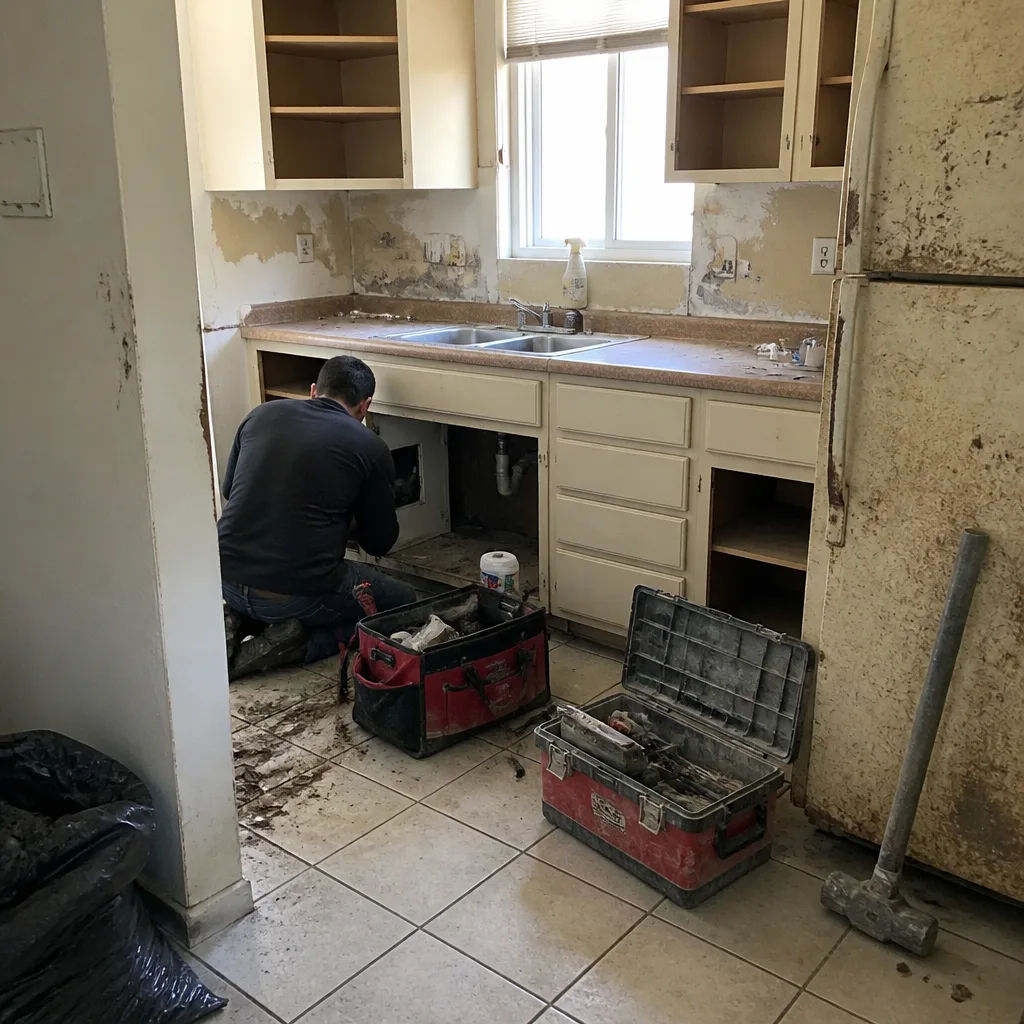 Before
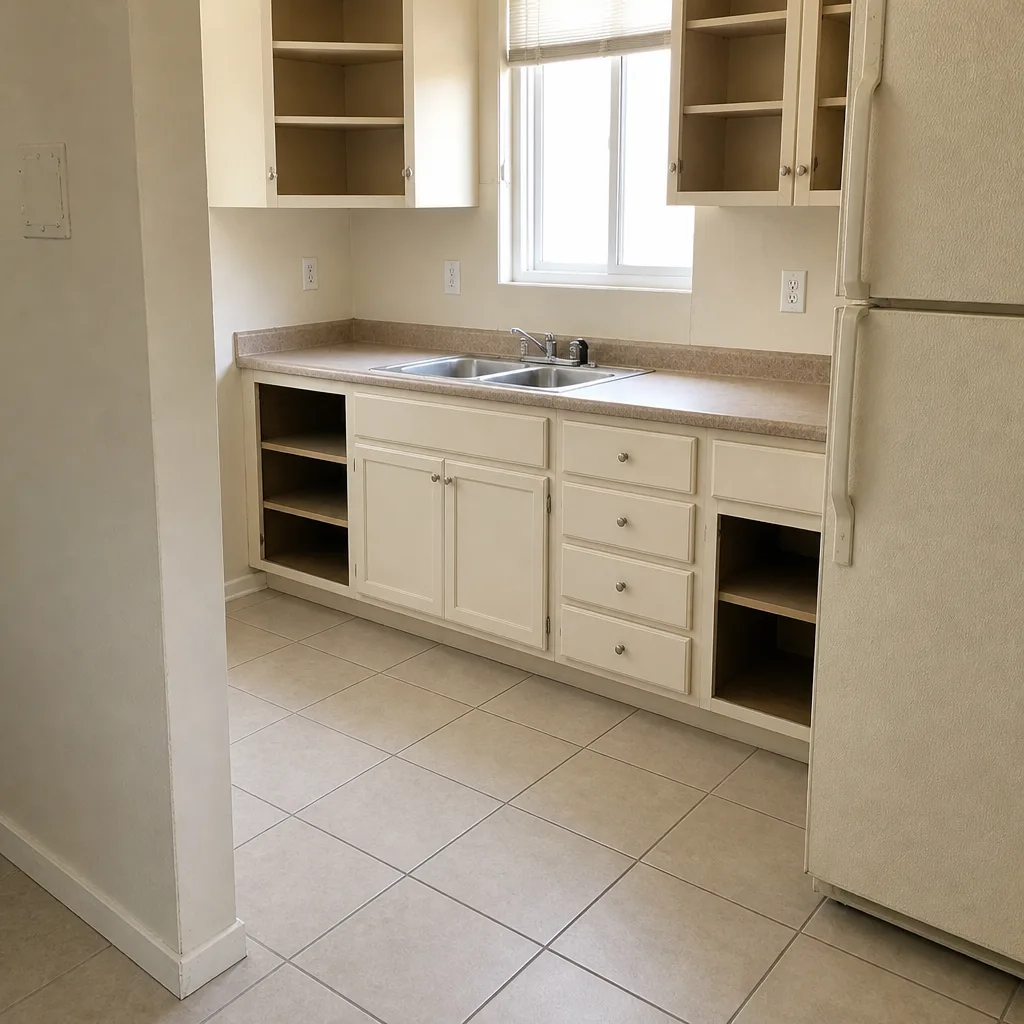 After
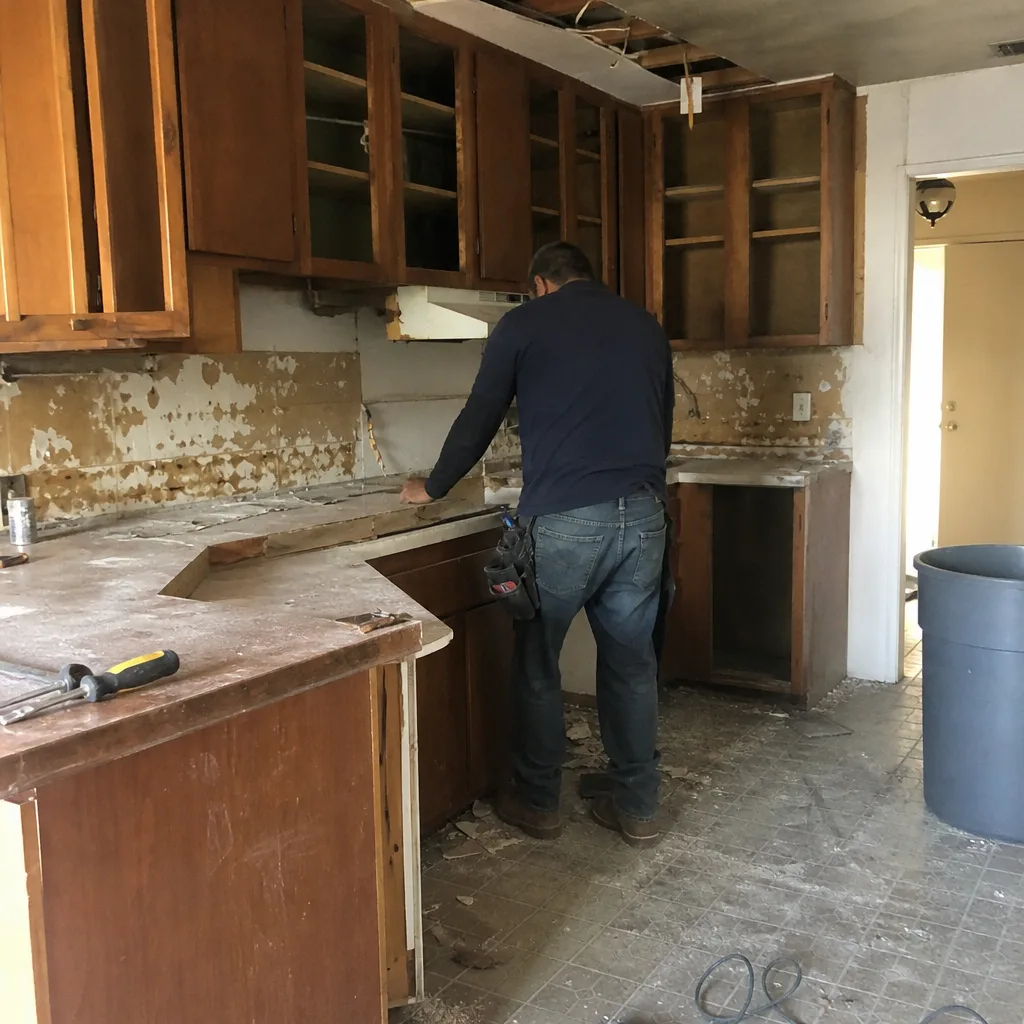 Before
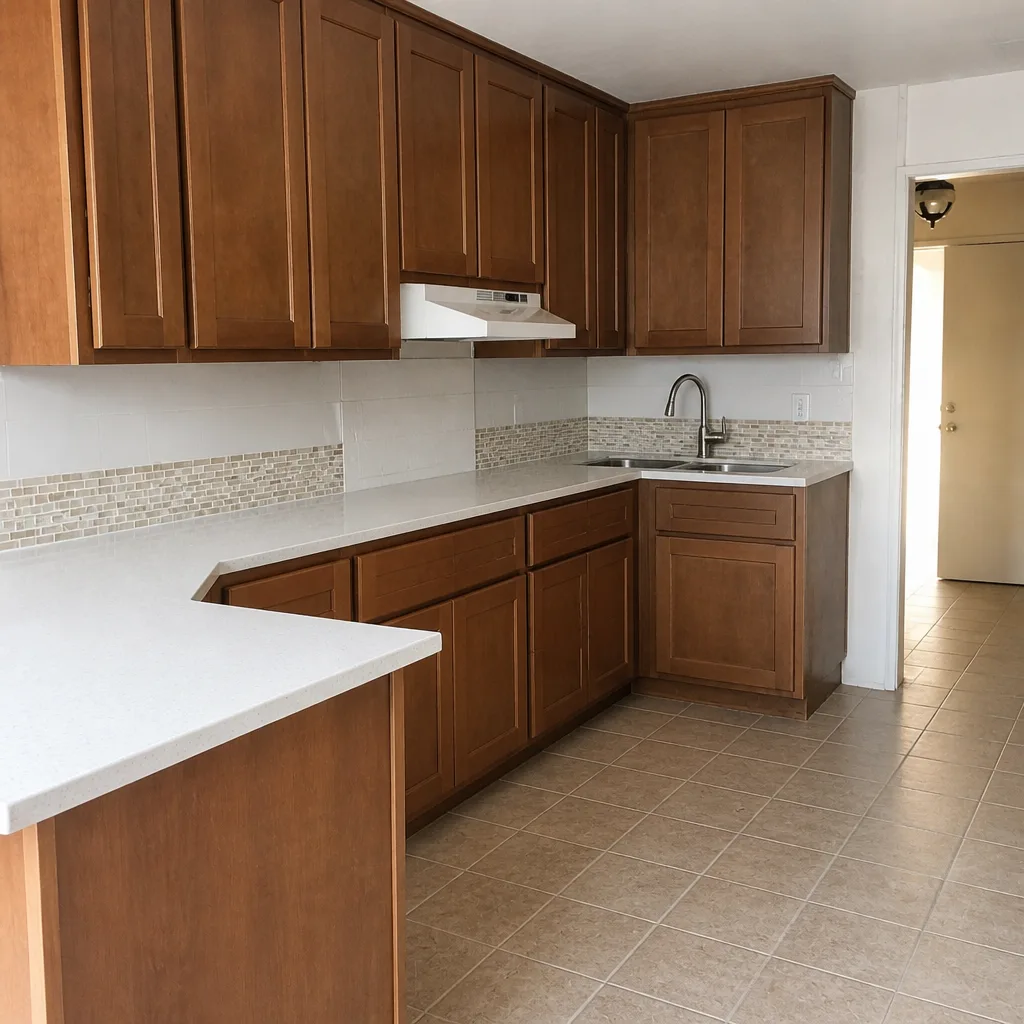 After
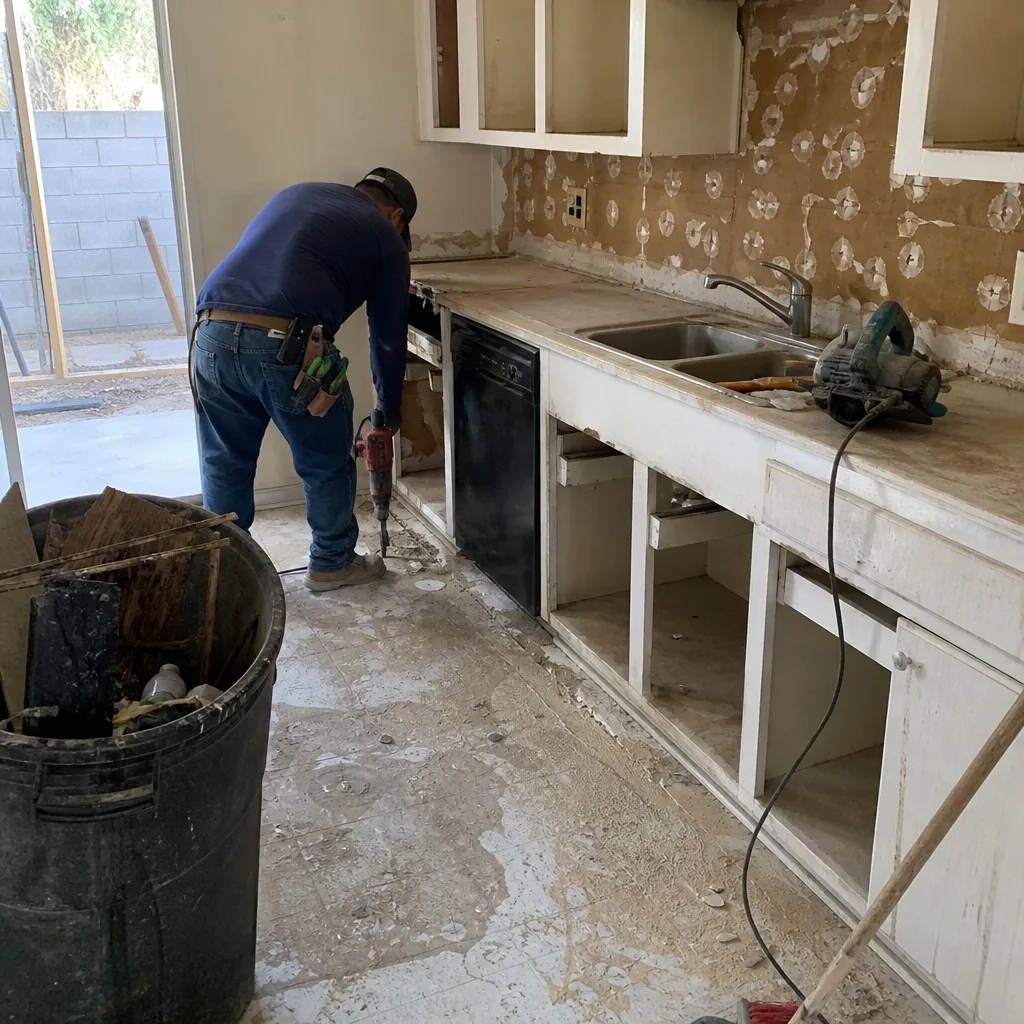 Before
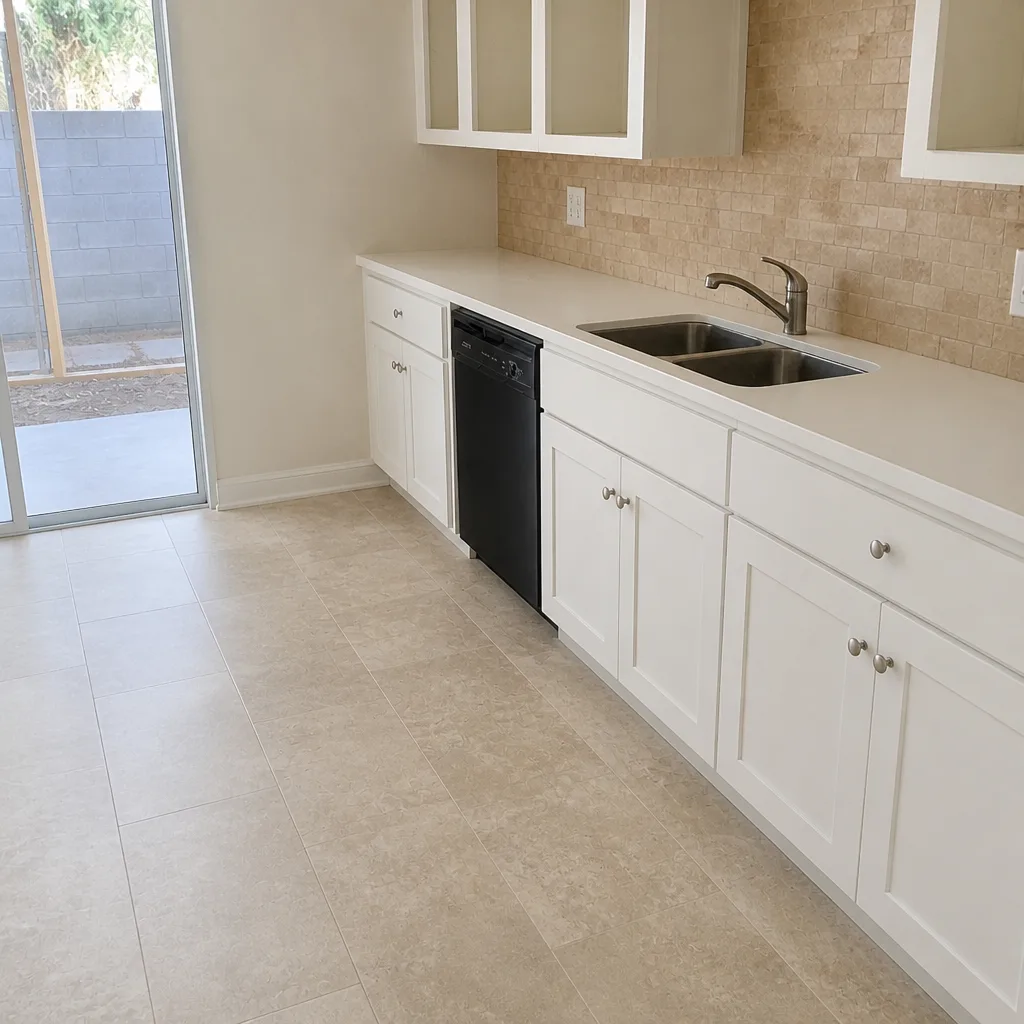 After
When to Call a Professional
Call a professional when the issue crosses from care into condition. If a countertop edge is showing water infiltration, a cabinet is structurally moving, a drawer or door is beyond adjustment, or a quartz surface has a mark you can’t account for, get a professional eye on it before trying to solve it. The same is true of anything that involves water where it doesn’t belong. North Las Vegas homes also see hard water damage accumulate in ways that are visible only to someone who looks at kitchen surfaces regularly, and a professional assessment can save a small issue from becoming a replacement project. Our technicians have up to 14 years of experience, and we look at kitchens every day. Kitchen Remodel North Las Vegas offers free estimates in North Las Vegas. Call (833) 620-5631 to schedule one.
Frequently Asked Questions

Daily wipe-down with mild soap and warm water, and a deeper clean weekly. Homes in North Las Vegas with especially hard water should also keep the sink edge and seams dry after use, because standing water is where mineral deposit grows fastest. A monthly edge check is a reasonable habit. If you’re seeing marks that don’t come off with mild cleaning, call us at (833) 620-5631 for an assessment.
Quartz surfaces like Cambria, Silestone, and Caesarstone don’t require the full-surface sealing that natural stone does. What they do need is proper sealing at the edges where the countertop meets the sink or wall, and that seal is worth checking every six months, especially with hard Las Vegas Valley water. If you’re unsure what your edge seal looks like, our team can take a look.
UV exposure. South- and west-facing windows in North Las Vegas deliver high afternoon sun, and finish fade shows up first on the cabinets nearest that window. Wiping with a wood-safe cleaner, rotating countertop items so exposure is distributed, and considering a UV film on the worst window all help. If fade has already happened, we can discuss refinishing or replacement options during a free estimate.
At 30 days, check every cabinet door and drawer for alignment, look at all countertop seams and the sink edge for any movement, test every drawer for smooth operation, run appliances through full cycles, and verify hardware is tight. Catching settling early is the whole point. If anything has shifted, call (833) 620-5631 and we’ll assess it while it’s still small.
Hard water leaves mineral deposit that dulls finishes, restricts flow, and puts stress on internal components over time. It’s not an overnight problem, but the cumulative build-up is real. The easiest protection is monthly aerator cleaning and a proper under-sink filtration system. If your fixture is already showing build-up you can’t clear, call for a free estimate.
Yes. Cabinet installation and countertop installation are the core of what we do. That means the alignment, sealing, and finish work are coordinated as one scope instead of split between two companies. Call (833) 620-5631 to schedule your free estimate and talk through your next kitchen project.
The Bottom Line
The maintenance a North Las Vegas kitchen needs after a remodel is dictated by three local forces: hard water, desert sun, and Mojave dust. Build your plan around those three and a structured timeline (30-day, 6-month, 1-year) of inspection and adjustment. Handle the monthly tasks (aerator, fixture wipe, grout line, cabinet face). Respect the brand-specific care for KraftMaid, Wellborn, Cambria, Silestone, and Caesarstone surfaces. Photograph the kitchen after installation, mark your dates, and catch settling before it gets expensive. That’s how a kitchen built around premium brands stays at that level. Call (833) 620-5631. We answer 24/7. Fast dispatch from 7am to 7pm, Sunday through Friday.
Written by the team at Kitchen Remodel North Las Vegas.